This Wednesday at 10am Irish time I will be presenting a free webinar for Legacy Family Tree Webinars as part of their Down Under series. The webinar will be discussing the 1922 Public Record Office of Ireland fire and the recent Virtual Record Treasury project.
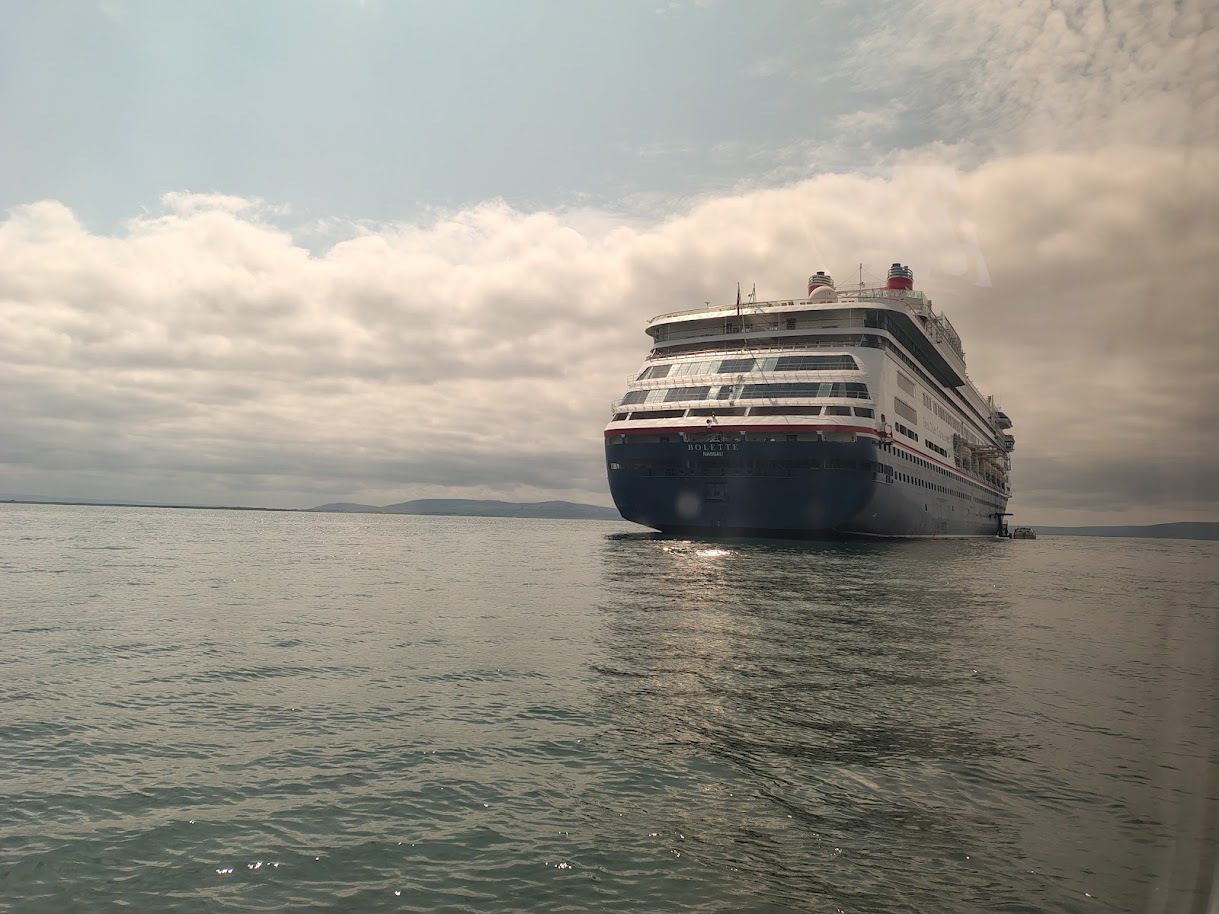
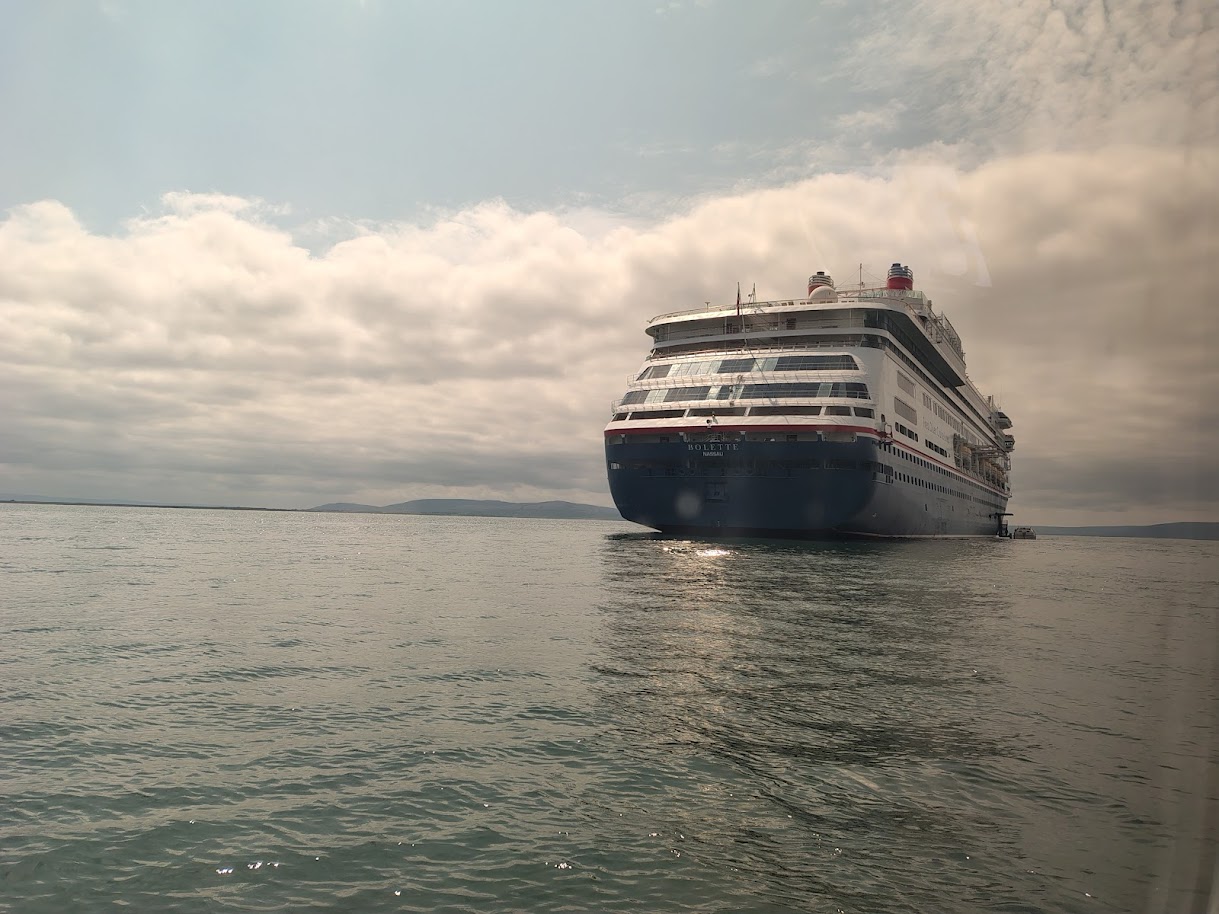
I just got back from a week long cruise around Ireland as a guest speaker on board the Fred Olsen ship Bolette. It was an amazing experience and I felt it was a good idea to write about the cruise and record some thoughts and observations about the experience.
How did this come about?
I’ve never been on a cruise before but some family and friends have been on board them as passengers. I also know a few other genealogists who have experience of being on board cruise ships as speakers, but often these tend to be specialist cruises with a focus on genealogy and ancestral travel. It sounded interesting but I wasn’t aware of similar opportunities here.
However, in late 2023 I was contacted by an agent working on behalf of a cruise company that were looking to hire a speaker with an expertise in Irish history. We chatted over Zoom but as the months went past I never heard from him again. But it did make me curious about whether similar opportunities existed. Fortunately, I came across Nigel J. Hetherington and his company, Past Preservers, on social media. They work with a number of cruise companies to hire guest speakers with an expertise in history and archaeology. It’s all very straightforward.
Past Preservers maintain a database with details on upcoming speaker opportunities and the topics each cruise is looking for. Typically they are looking for someone who can speak on topics related to the local culture at that destination, including it’s history and traditions. You do not apply to the cruise company directly. You register in Past Preservers guest speaker database, go through the database of available cruises and then complete an application form listing the cruises you are interested in, with a list of talks you can give. Details of current opportunities are available here. I should stress that there is no fee for joining their database and that they don’t sell your information onto other parties.
It took a few weeks before I received word that I had been chosen to speak on board the Fred Olsen cruise ‘Exploring the Iconic Coastline of the Emerald Isle’ from June 6th 2025 to June 13th 2025, and that they wanted me to deliver two lectures from those I had submitted. One on Irish folklore and the other on Irish genealogy. The itinerary included stops in Dun Laoghaire (Dublin), Belfast, Galway, Cobh (Cork) and then a return to Liverpool. I didn’t receive more detailed instructions until a few weeks before the cruise, including my contract and my check in time.
On shorter cruises guest speakers aren’t paid but you do get a free cruise and are given £25 ship’s credit per day. Food is already free but the credit goes towards other purchases on board, such as alcohol, goodies from the various cafes, anything you buy from the various shops on the ship, excursions at the various ports and some onboard activities such as whiskey tasting, afternoon tea or a Martini experience. WiFi is optional and deducted from the credit. It should also be noted that WiFi is relatively basic and there are restrictions on what sites you can access, no streaming for example. There is also a £2 gratuity which goes towards the cleaning and serving staff on board. A debit or credit card is registered with the ship at the time of check in and any purchases that exceed the ship’s credit are charged to your personal card at the end of the cruise. You are also allowed bring a plus one with you on the cruise for free.
Life on board the Bolette
The Bolette was departing from Liverpool in the early evening of Friday 6th June but understandably I needed to be on board earlier. With no direct flights from Cork to Liverpool on that day, I had to fly to Manchester and take a bus to Liverpool. Fortunately both cities are close together and it’s a relatively short bus journey. I missed my original check in time (my own fault for trusting Ryanair to be punctual) but fortunately I was still able to board once I arrived. I would assume the purpose of the check in times is to stagger embarkation so as to avoid congestion. You are meant to receive luggage tags in advance, although mine didn’t arrive on time because of international postage. The staff had luggage tags anyway so it wasn’t a big deal. Any luggage you have with you is tagged and checked in, similar to an airline, going through a scanner. The luggage will then be delivered on board and deposited outside your cabin.
My cabin was relatively basic and not particularly spacious but I’m not the sort of traveller who demands luxury. For a cruise lasting only a week it was comfortable and suited to my needs, especially since I was travelling solo.
When I arrived at my cabin there was a document waiting for me, which had contact details for the important crew members on board and had a provisional timetable for the various lectures and workshops. There was an informal meeting with the Cruise Director in the card room, along with some of the crew working under her. While in theory, the Cruise Director was going to be our main point of contact, the person I dealt with most often in terms of scheduling my two lectures and sorting out technical requirements was the Admin Hostess. This is understandable because the Cruise Director has a lot of other responsibilities on board, including managing the in-house entertainment team on the ship. The lectures were scheduled for our two days at sea, on Monday 9th June and Thursday 12th June.
Along with myself, there was another guest speaker on the cruise. Richard Lovelock is a professional photographer and delivered two lecturers on the secrets of smartphone photography. His wife Laura, was on board to deliver the origami workshops but also gave a surprise lecture on the Titanic and it’s connections to some of our ports of call. Aside from guest speakers, there were also a number of other guest entertainers, including a bridge tutor, a pianist and some dance teachers. Many of these are regulars on board various cruises.
I took some time to explore ship after the meeting. The Bolette is one of the biggest cruise ships and the flagship of Fred Olsen’s fleet. There are ten decks, although a good portion of that is made up of passenger cabins. There are also a number of lounges, bars, cafes, restaurants, an auditorium, a library and the Neptune Lounge, where most of the entertainment (including guest speakers) took place.
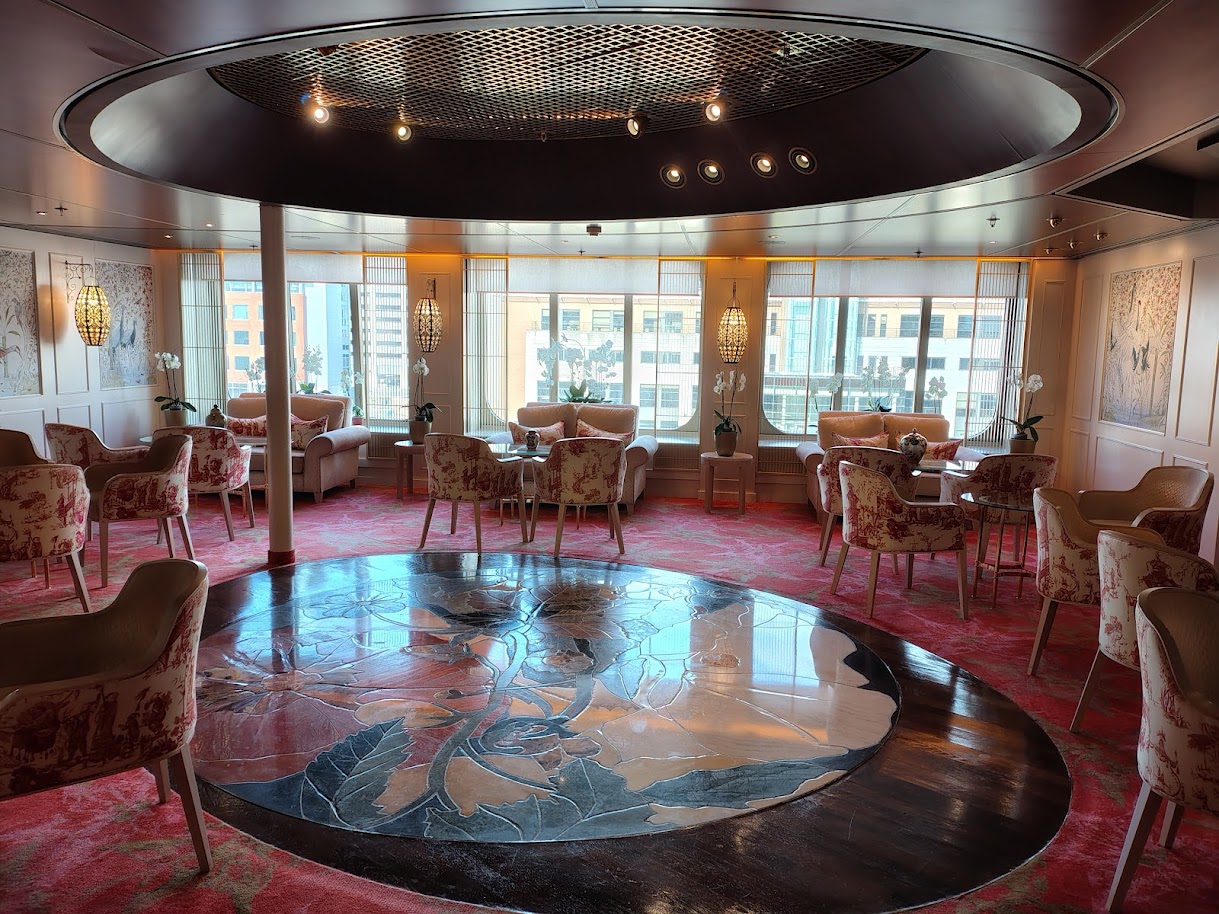
Some of the lounges where you can sit and relax
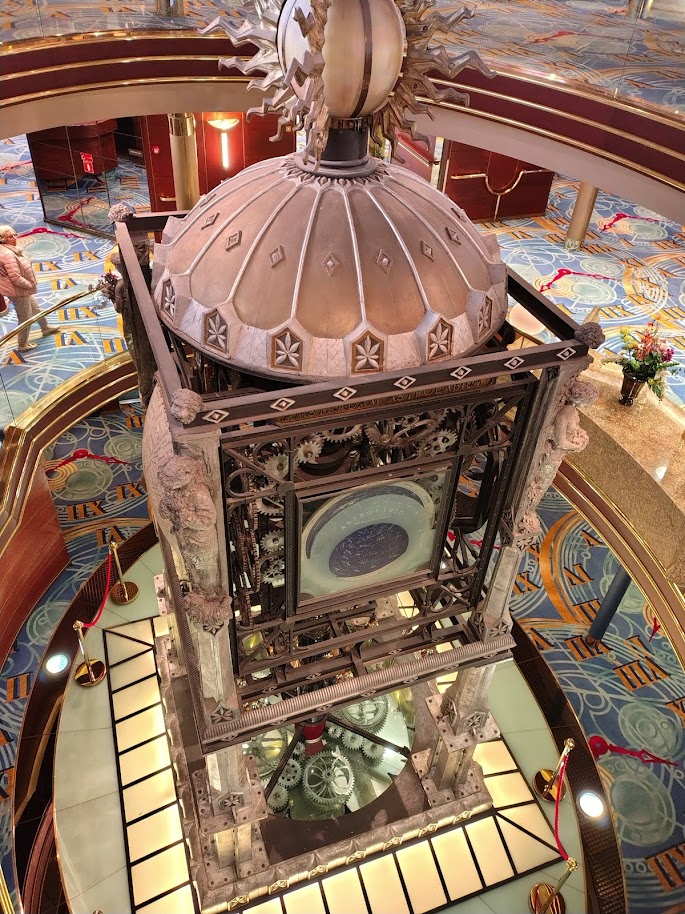
The clock tower at the centre of the ship
On Shore Excursions
After exploring, one of the first things I did was to call on the Destinations Desk, who arrange the various excursions. I mentioned already that excursions are deducted from the ship’s credit. However, there is an option to allow you to go on the excursions for free. This involves arranging with the team at the Destinations Desk to act as an escort. An escort simply brings up the rear on the tour, keeping track of everyone and acting as a representative of the ship and of the passengers on the tour. The evening before the excursion you are given a sheet which you will use to keep track of various details on the outing, such as how many participated, the name of the guide and any issues those on the tour might have encountered. You also carry a bag with the first aid kit and a paddle you see on tour groups, just in case someone on the tour has trouble finding their way back. You are also asked to take some photos of the excursion and send them to the Destinations Manager. It should be emphasised that the paying passengers get priority on these excursions. If a certain excursion is booked out then you will have to choose another for that port. On one occasion an excursion I chose was cancelled because of a lack of bookings.
During the cruise I had the opportunity to visit the Jameson Whiskey Distillery in Dublin, the Giant’s Causeway in County Antrim, a walking tour of Galway City and a visit to Blarney Castle here in Cork. Usually the process is to meet the guide on shore and they will have a list of passengers going on the excursion. A member of the destinations team is usually waiting on shore to coordinate everyone. Depending on the port and how they are set up to handle cruise ships, it might be necessary to take a tender back and forth from the ship.
The Giant’s Causeway in County Antrim
Lectures
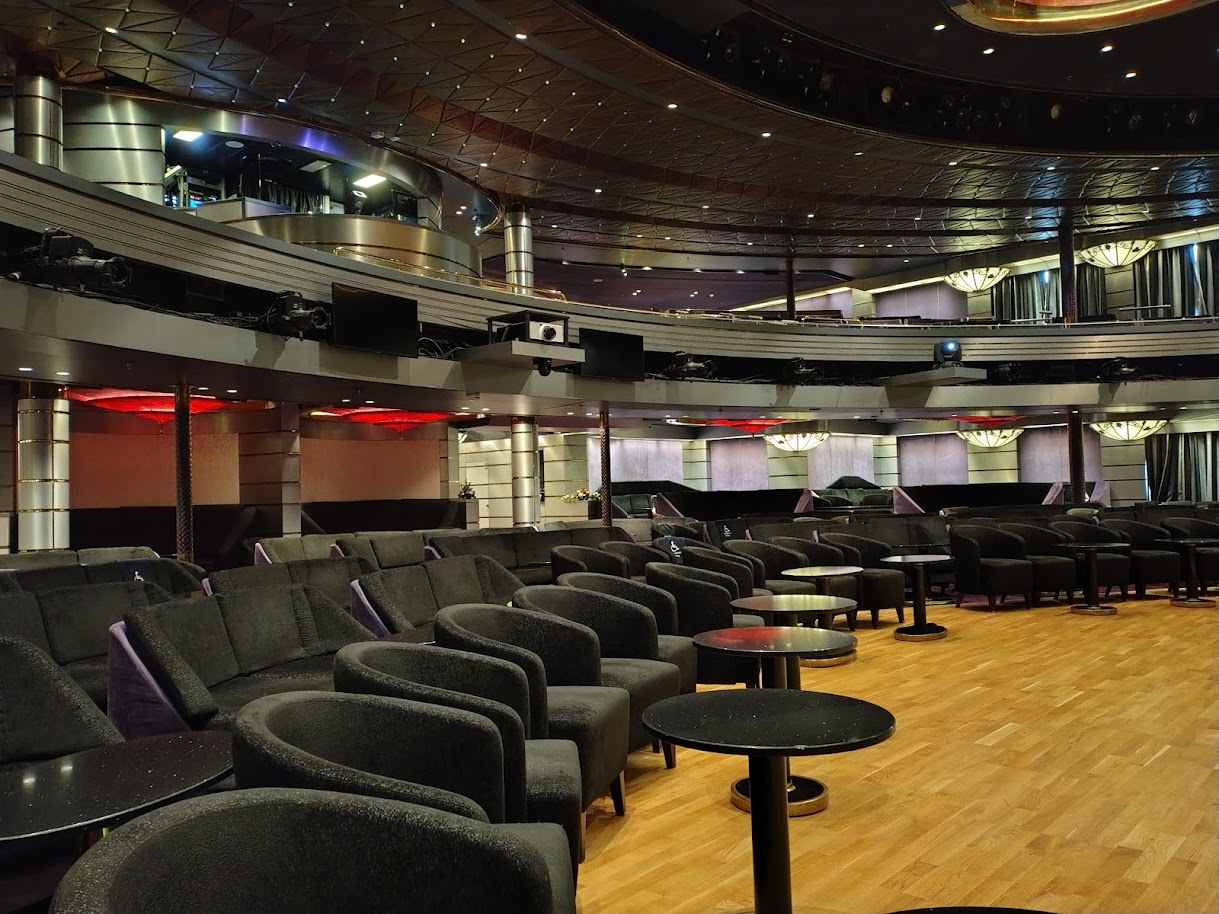
All the lecturers by guest speakers such as myself took place in the Neptune Lounge, on the fourth and fifth decks of the ship.
The Neptune Lounge
As I mentioned already, I had sent a list of my requirements to the Admin Hostess in advance and she had kept me up to date with any issues around scheduling. Sometimes it was necessary to move a lecture around in order to avoid a conflict with another event taking place at the same time. A cruise is a busy place with a lot of different activities happening daily, especially on those days at sea. A short newsletter, the Daily Times, was distributed to each cabin every evening with details on events happening onboard the following day, including the lectures.
I had brought my own laptop but was instructed to arrive at the Neptune Lounge roughly twenty minutes in advance. This was so everything could get set up. The technical staff are very good at their jobs. My laptop was plugged in and the display ready. I also had to get a microphone attached. While all that was happening, passengers started wandering in. I felt that I got a good attendance on both days. I would hope that’s because my topics were interesting and not because there was nothing else for people to do. The one thing to be careful of is your time. Each lecture is scheduled for 45 minutes and it’s important that you stick to that. Often there will be another event scheduled in the lounge directly afterwards and that requires setting up. This also means there’s no time for audience questions. If someone has a question then they can approach you directly after the talk or later during the cruise.
Dining on Board
One of the great things about a cruise is the food and this is true of the Bolette. There were multiple dining options. Most of the fancier restaurants required a reservation and had a dress code. For example, there were two formal nights on the ship, where guests were required to dress in black tie formal wear for some of the restaurants. For those who wanted less fuss and avoiding having to make a reservation, there was a buffet restaurant on deck eight, the View. This was ideal for those days when you didn’t feel like dressing up or were in a hurry.
I did eat in the main formal restaurant, the Bloomsbury, twice. The first occasion was the evening of our visit to Galway for the second formal night. Guest speakers were politely asked not to make any reservations for the Bloomsbury until after the first formal night, so that paying passengers would get priority. This is perfectly understandable. This wasn’t a problem for me because I prefer the less formal dining experience anyway. But it was worth putting on a tuxedo and bow tie to try it out. There was also a guest speaker lunch experience that passengers pay to have a private lunch with the speakers. This gives them an opportunity to have one to one conversations with the guest speakers. There wasn’t a huge turn out for the one on our cruise. But it was a nice experience to meet with some of the passengers on a more personal level.
The food in all the restaurants I dined in was great. Even the buffet restaurant had a wide variety and it was good quality. I didn’t avail of any of the alcohol on board because I’m not much of a drinker and wasn’t sure it was a good idea to be tipsy on board a ship.
The only other place I dined on the ship was at the Bookmark Cafe. This was a cafe in the librarian section that served a variety of teas, coffee and cakes. Even though there was tea in my cabin, sometimes it was just nice to be around other people while reading and enjoying some tea and cake.
Disembarkation
The one part of the cruise I hadn’t been prepared for was disembarkation on the final day. Details on this will usually be provided the day before and there will be several announcements. For our cruise, we arrived back into Liverpool early on the morning of the final day. If we wanted, we could leave our luggage outside our cabins the night before and it would be waiting for us in the cruise terminal. We were given a sheet with instructions on when disembarkation would begin. Some passengers were booked on a shuttle bus to the train station or had cars in the car park. Those were the usually the first ones to disembark. The rest of us were called by our luggage tag colour. Regardless of when we were disembarking we still had to be out of our cabins by 8am and that meant a bit of waiting around while waiting for our group to be called. Thankfully the restaurants were open for breakfast on the morning of departure and there was no problem sitting in one of the lounges while waiting.
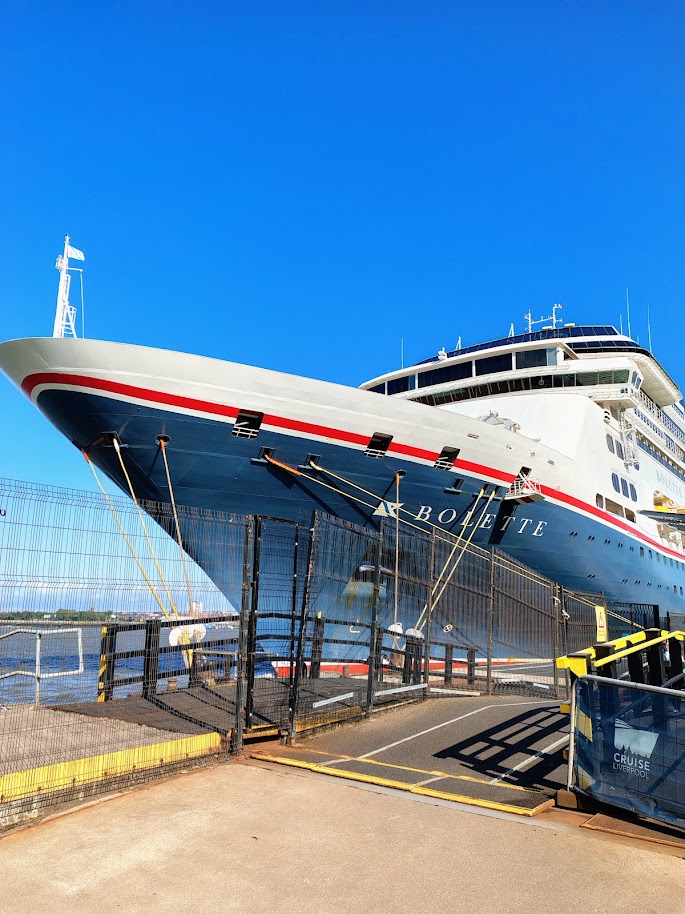
The Bolette in Liverpool on the morning of departure
Final Thoughts
One of the things I expected of a cruise was that the average age would veer towards the elderly. And while that was mostly the case, there were some younger people on board, including a few families with kids. However, I don’t know if there was much for young kids to do. When preparing your talks, keep in mind who the likely audience will be.
The crew were fantastic. Speaking to some of them, it was evident how well trained and professional they are. From the cabin stewardesses who clean the cabins, to the servers in the restaurants and the crew in destinations and entertainment. All of them take their jobs seriously and put looking after passengers at the heart of it. At any time of the day or night you will find some of the crew hard at work, especially when it comes to maintaining the functioning of the ship. Cleanliness and hygiene was also taken seriously. While it should go without saying, be sure to be courteous and respectful to any crew you interact with. You’re all going to be at sea together for at least a week, if not longer.
The entertainment on board was good, if very English in nature. There was a stand up comedian on two of the nights, Danny Posthill. He did some great impressions. The ship also has it’s own on board theatre company who put on some dance performances and performed songs from well known West End musicals. There were usually performances in some of the lounges most nights. All in all the atmosphere on board was sedate and calming.
What about those travelling solo? At first it can seem a bit lonely, especially the first day or two. But you will eventually get to know people, especially from going on excursions or taking part in other activities. There also specific meetups for solo travellers throughout the cruise.
I already mentioned that WiFi is limited on board. You won’t be able to stream or download media. I would recommend downloading any favourite shows or podcasts before the cruise. If you need to take any online meetings or do specific work that requires a strong internet connection then bringing along a mobile hotspot is probably the best idea.
Travel insurance and health insurance are mandatory and they will require you to provide your insurance details before travelling. There is a health centre on board in case of illness and plenty of ways of keeping fit, including a gym, swimming pools and jacuzzi’s.
Overall it was a great experience and I hope to try it again in the future. I’ve already applied for some more Fred Olsen cruises visiting Ireland next summer. It was a unique way to experience my own country. I might eventually also look into guest speaker roles with other cruise lines.
Since it looks like we are likely in for the long haul with Covid-19 and the lockdown measures it can be a bit frustrating trying to find ways to keep busy. Fortunately this is also a good opportunity to broaden your genealogy skills or even sort through some of your family history material.
Webinars can be a great way to learn something new. Legacy Family Tree have extended their free daily webinars throughout the month of May. You can find the list of free webinars here. If you have membership of the site it’s also worth exploring their extensive back catalogue of webinars, including my own on planning an Irish research trip.
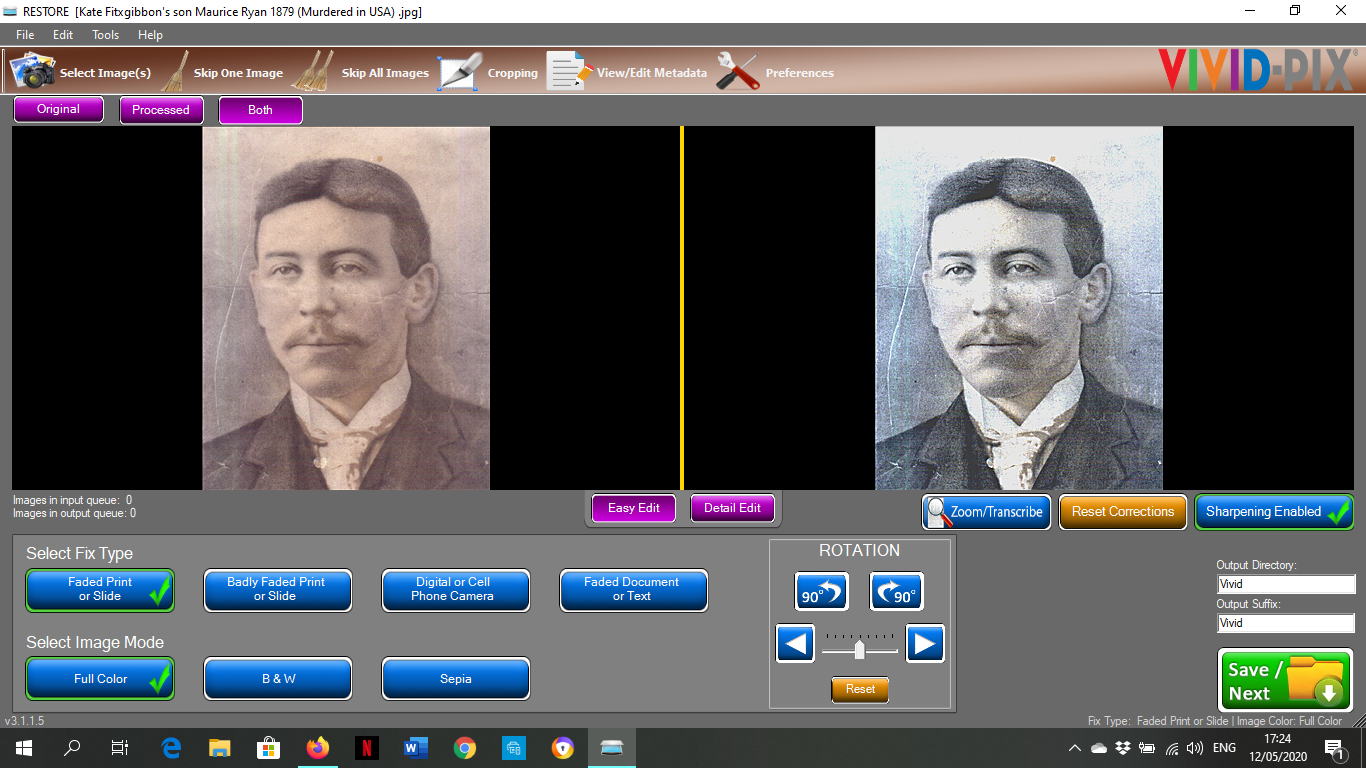
If you are in the mood for even more great webinars there is also the recently launched ‘Round Tuit’ series from Vivid-Pix. This includes conversation and presentations from some of the biggest names in genealogy on a wide variety of topics. If you have old photos it’s also worth checking out their software for photo restoration.
Vivid-Pix Photo Restoration Software
There are no shortage of other great genealogical activities to engage in while stuck indoors. If you enjoy transcribing old documents then you should check out the Schools Collection, part of the National Folklore Collection of Ireland. The collection comprises folklore and local traditions compiled by pupils from 5,000 primary schools in the Irish Free State between 1937 and 1939. Often the stories collected contain hidden nuggets on the local area, providing context for the lives of our ancestors. It can also be a chance to help transcribe stories collected by our own relatives. Some of my grandfathers siblings were among the children who collected the stories, which they received from their own grandparents.
Being in lockdown is frustrating and seemingly never ending but it’s also an opportunity to learn something new. Stay safe and hopefully we will come through this current emergency safely. Anyone with an interest in genealogy, regardless of level, is also welcome to join an informal gathering on Twitter at 7pm Irish time for Ancestry Hour. Just use the hashtag #ancestryhour
The current situation with Covid-19 has meant plenty of disruption, especially to those of us in the genealogical business. A lot of events have been cancelled, which impacts on our speaking engagements and we are limited in our ability to research with repositories closed to the public.
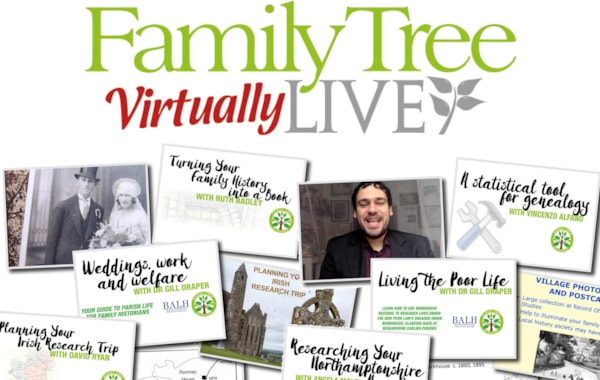
This past weekend I was meant to be in London to speak at Family Tree Live. Unfortunately the event wasn’t able to go ahead as planned but some of us who were due to speak recorded our planned talks to deliver virtually. You can find my three talks (and many other very informative talks) on their website for free until April 24th.
I was also invited to participate in a new initiative hosted by Daniel Earl, the Family History Guy, and Vivid-Pix. These ’round tuit’ classes are a mix of educational presentation and fun discussion. I am honoured to be among some very big names in the world of genealogy. You can register for my class on Irish genealogy this evening at 8pm Irish time / 3pm EST and it will be available to view for 30 days afterwards.
A few weeks ago I had the pleasure of presenting at the Association of Professional Genealogists Professional Management Conference in Salt Lake City. This year was extra special because it marked 40 years of APG. This was also a unique opportunity to visit Salt Lake City itself. Regardless of your religious persuasion it’s impossible to ignore how central Salt Lake City and the Church of Jesus Christ of Latter Day Saints has been to genealogy and the availability of various records. A visit to the Family History Library in Salt Lake City is likely on every genealogists wishlist.
The impressive Temple in Salt Lake City
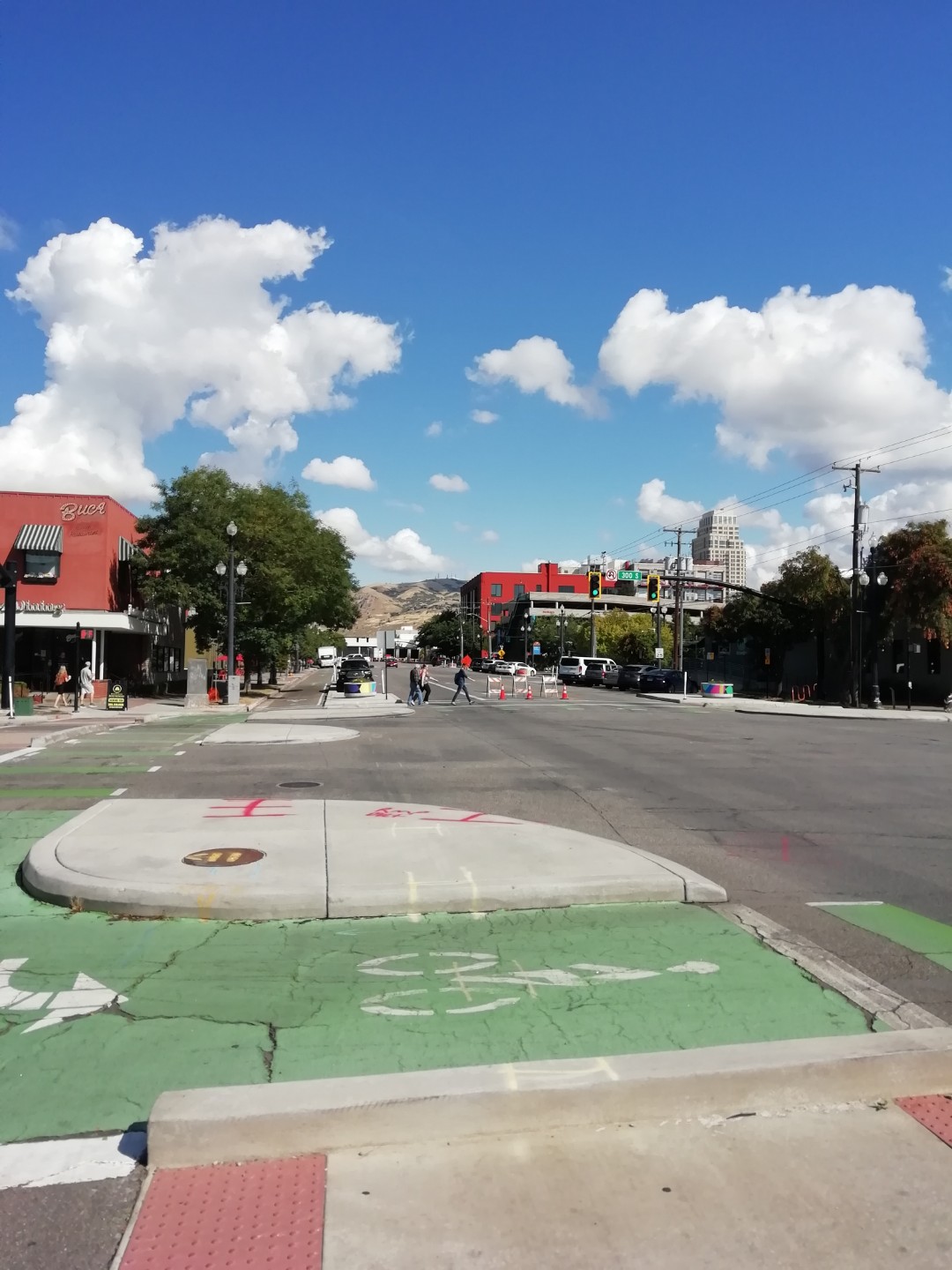
Great views of the mountains wherever you are in Salt Lake City
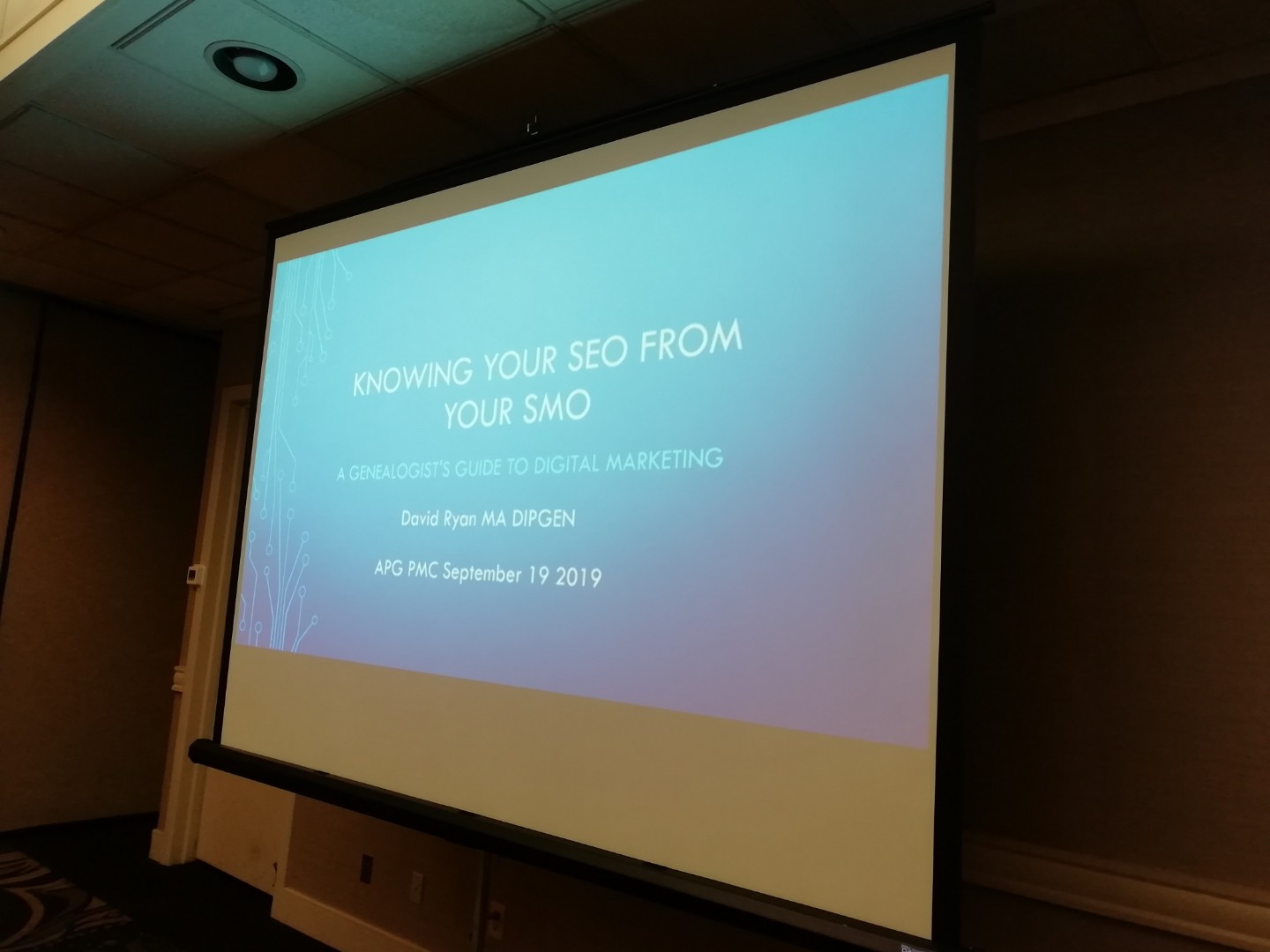
At the PMC I was presenting a talk on using social media for genealogy businesses and also presenting a poster on oral history resources for genealogy.
The title slide of my talk at the APG PMC
My poster on oral history and genealogy at the PMC
There was also a welcome reception at the head offices of Ancestry and tours of the Family History Library, the Church History Library and the 28 storey Church Office Building, which provided some stunning views of Salt Lake City.
View of the State Capitol from the 28th floor of the Church Office Building
Checking out the main research floor of the Family History Library
One particular standout moment from the PMC was encountering so many young professional genealogists and seeing a growing international turnout. One of the things I appreciate most about APG is the fact that it is an international organisation. Most of it’s membership is American but it’s good to have an organisation that helps to connect genealogists worldwide. We had Irish, Australians, Canadians, Hawaiians, Alaskans and Mexicans.
On the final day of my visit to Salt Lake City I attended mass in the Madeleine Cathedral, a stunning Catholic cathedral and met up with Kyle Betit and Quentin Burrows of Ancestry ProGenealogists
Exterior of the Madeleine Cathedral
I was also lucky enough to meet up with Andrea DuClos and Mindy Taylor, both fellow alumni of the ProGen Study Group I spent the last year participating in.
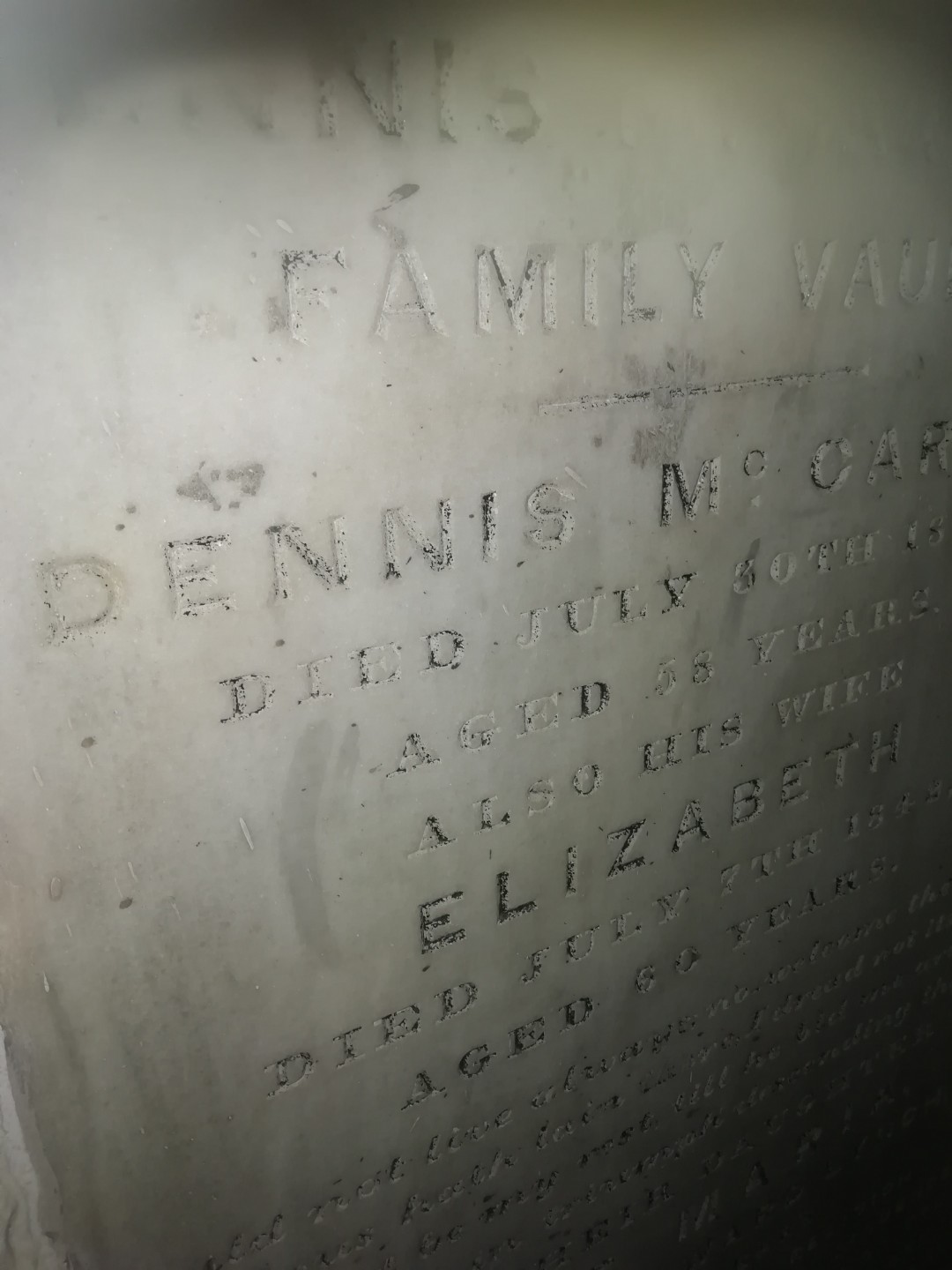
The second half of my trip was spent in New York City. During this time I got the opportunity to sit down with Yukie Ohta of the Soho Memory Project and learn about what she does. I was particularly interested in the oral history aspect of the project but any time spent discussing local history is worthwhile. I also got to take a tour of the graveyard and catacombs of the Basilica of St Patrick’s Old Cathedral. I admit that before this I hadn’t known there were two St Patrick’s Cathedrals in NY. The familiar cathedral in midtown is the second cathedral with the name. The first St Patrick’s is located on Mott Street near Little Italy. The catacombs underneath the basilica have only recently become accessible to the public through guided tours. It’s no surprise that many of the names on the vaults are of Irish origin.
The Basilica of St Patrick’s Old Cathedral in New York
Grave of John Curry, the youngest witness to the apparition in Knock, Co. Mayo in 1879. He emigrated to New York and was originally buried in Long Island. In 2017 his remains were reinterred in the graveyard of Old St Patrick’s
One of the burial vaults in the catacomb underneath Old St Patrick’s
No visit to NYC is complete without a few hours spent in the 42nd Street branch of the NYPL. I would particularly recommend browsing through the Irma and Paul Milstein Division of United States History, Local History and Genealogy in the library. While I was there I was able to sit in on a talk by one of the librarians, Andy McCarthy, on using the libraries resources for family history research.
The iconic main entrance to the 42nd Street branch of the New York Public Library
In heaven in the Irma and Paul Milstein Division of United States History, Local History and Genealogy section of the NYPL
I hope to be back in Salt Lake City someday, even just to spend a week in the Family History Library. For now I can look forward to more genealogy at Back To Our Past in Dublin next weekend and RootsTech London the following weekend.
I’m just back from attending and speaking at the first ever The Genealogy Show, which was held at the NEC, Birmingham, UK on June 7th and 8th. This was my first time speaking at a UK genealogy event. I’m very appreciative to have had this opportunity. It was also great to get a chance to fly into somewhere that wasn’t London. The short flight time between Cork and Birmingham was a major advantage, plus being able to just walk into the NEC from the airport. I didn’t get to explore Birmingham itself but maybe next time.
edh
edh
edh
edh
edh
edh
edh
edh
edh
edh
edh
edh
edh
edh
edh
I was speaking on the Saturday about using oral history for genealogy. I didn’t get a massive turnout for my talk and ran into some technical hiccups when the interview clips I had hoped to play didn’t work. But those who were there seemed to enjoy the talk. Given that this was my first time delivering this particular talk, it gave me the chance to figure out what worked and what didn’t. The next time I give this talk I might go for a title which is a bit more obvious and gives an audience a better idea of what to expect. But I had several interesting conversations with people on the topic of oral history afterwards.
edh
edh
Aside from speaking I also participated in the Personal Wizard consultations. I was most impressed with the fact that the show had laptops at each of the tables, saving the hassle of bringing our own. I don’t know if I was able to help anyone break down their Irish brick walls during the consultations but I would hope I at least pointed them in the right direction. What was of particular interest to me were the amount of Irish who seem to have been in the UK even before the Famine. This shouldn’t be a surprise but due to the increasing numbers who emigrated from the 1840s onwards, we of course tend to associate this period with Irish settlement abroad.
Everyone I talked to was very friendly, from the exhibitors, fellow speakers, to all the show volunteers. Everyone there seemed to be enjoying themselves. There was a wonderful international feel to the show, with exhibitors, speakers and volunteers from the UK, France, Spain, the Netherlands, Germany, Canada, Australia, the United States and of course Ireland.
One major highlight for me was getting to meet the author Nathan Dylan Goodwin and pick up a signed copy of his book. His genealogical mystery novels are always something I look forward to. I also was fortunate enough to receive a copy of the new book ‘Ethical Dilemmas in Genealogy‘ by my friend Dr Penny Walters.
edh
edh
edh
My only complaint (if you can even call it that) is that I didn’t get a chance to attend more of the talks. I was too busy chatting to people outside.
The Genealogy Show will return next year Friday 26 and Saturday 27 June 2020. Thank you to all involved. I’m already looking forward to next year and putting together ideas for potential talks.
The commemoration of the conflict in Ireland has always been a touchy subject. There was certainly a perception that the memory of the Great War had been overshadowed by the events such as the 1916 Rising and the Irish War of Independence. In recent decades, the inevitable distance of time has allowed for more recognition of the role played by Irish men and women in the conflict. We will likely never know exactly how many from Ireland lost their lives in the war. As well as the Irish regiments, there were Irish serving in British, American, Canadian, Australian and New Zealand armed forces, along with any number of civilian organisations involved in the war.
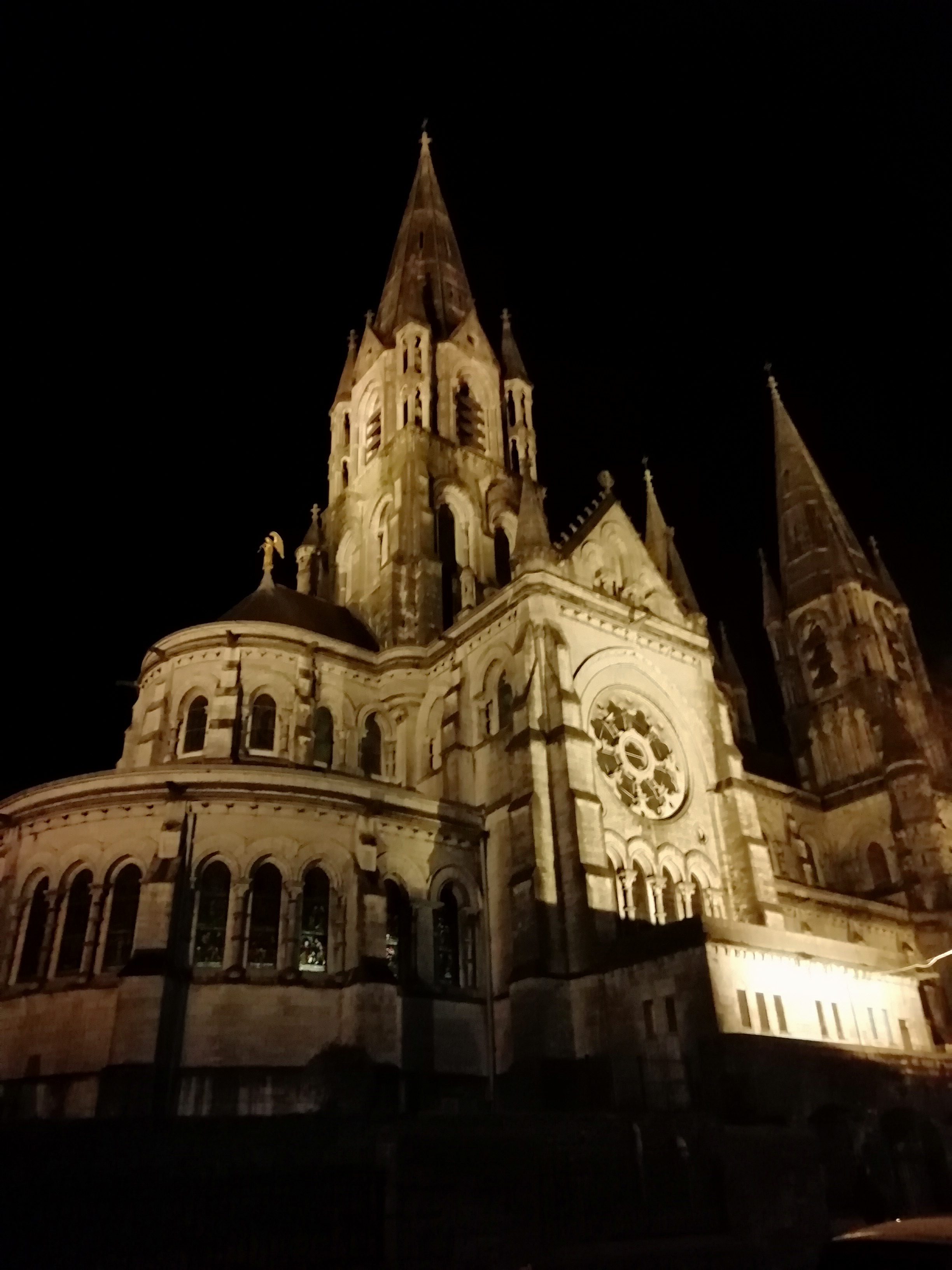
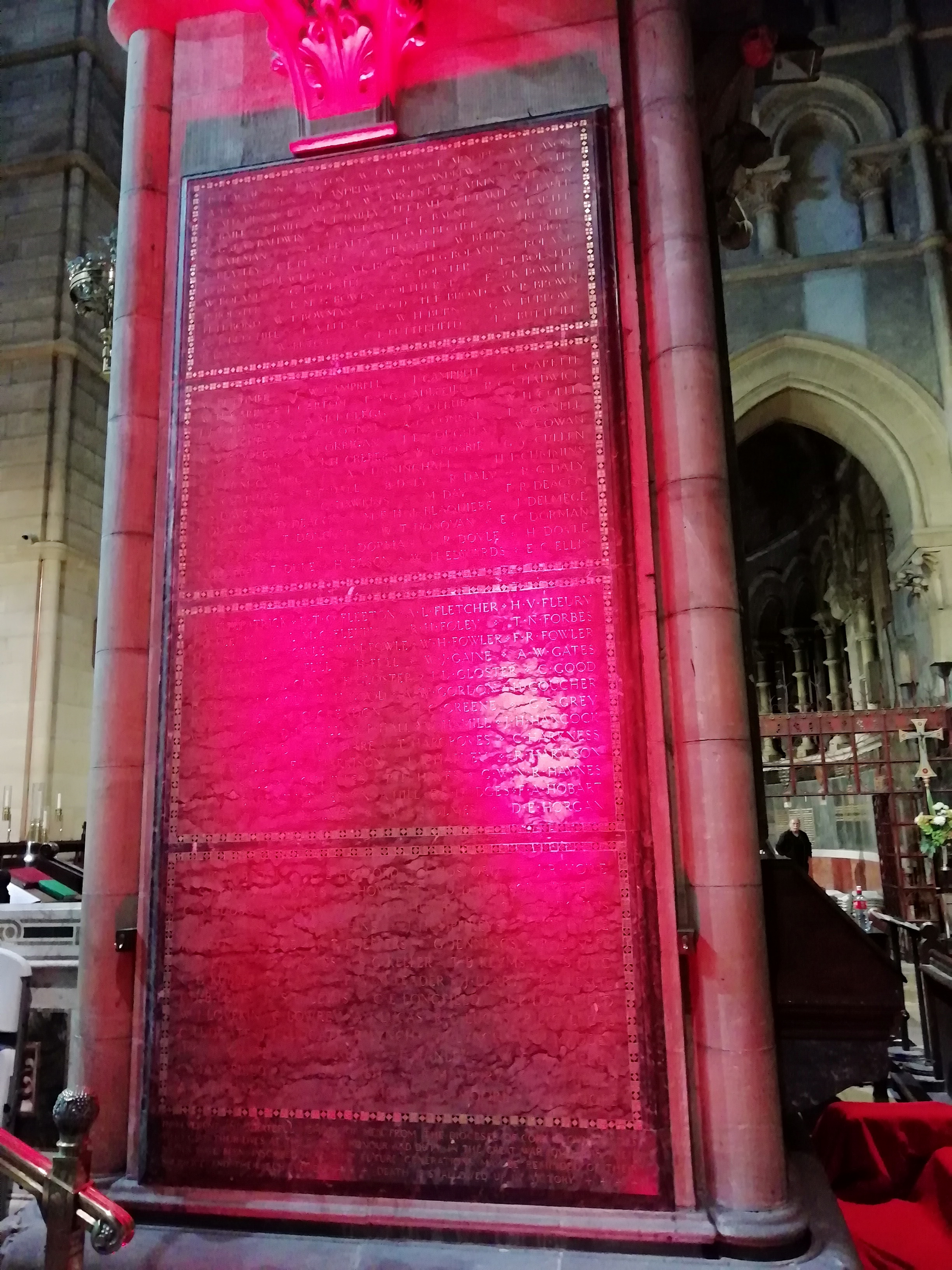
This weekend I was fortunate to attend a number of commemorative events in Cork to remember those who died 1914-1918. On Friday night there was an Evening of Remembrance in St Fin Barre’s Cathedral. This has become an annual event, organised by members of the Cork Branch, Western Front Association. This is always an especially poignant ceremony, featuring music, poetry and songs to commemorate not just those from Cork, or the Allied forces, but all of those who died in the war. The Lord Mayor of Cork, Cllr. Mick Flynn and the Bishop of Cork, Cloyne and Ross, Dr Paul Colton, delivered particularly moving speeches, reflecting on the impact of the war on their own families. They recognised also that even those who survived the war, often came back with physical and psychological wounds. Bishop Colton made an especially valid point about the impossibility of grasping the magnitude of those who died during the war and it’s immediate aftermath. Instead he advocated for focussing on the personal, of remembering those who died as individuals.
St Fin Barre’s Cathedral
Crowd gathering for the Evening of Remembrance
WW1 memorial in the Cathedral
WW1 Memorial in the Cathedral
Bishop Colton and the Dean of St Fin Barre’s Cathedral, Very Reverend Nigel Dunne, have also been engaged in a project the last four years in gathering together pictures of those from the diocese who died in the war.
Today there were a number of events held at the Cenotaph in Cork, to mark Armistice Day. There was a civic ceremony organised by the Lord Mayor and members of Cork City Council. This was followed by a mass in St Francis Church and a wreath laying ceremony at the Cenotaph by members of the Royal British Legion and relatives of those who died. The ceremony also includes members of the current Irish Defence Forces, veterans of the United Nations and even the British Armed Forces. Bishop Colton also delivered another address and there was a later Ecumenical service in St Fin Barre’s Cathedral.
btrhdr
Bishop Colton delivering the speech at the wreath laying
sdr
sdr
Member of the Irish Defence Forces laying a wreath
dav
Standard bearer for the Royal British Legion
The act of commemoration itself cannot help but be political and likely there will always be those who feel that by commemorating a conflict we are signalling approval. However, I would disagree with this. We may not agree with why WW1 or any other conflict is fought but that doesn’t mean we should simply forget it and those who fought. Commemoration doesn’t have to be about approval or condemnation. As the events in France today have shown, where the French President and German Chancellor stood side by side at Compiègne as they marked the centenary of the armistice signing, commemorating the end of the war can also be about present unity and learning from the mistakes of the past.
Regardless of how we feel about conflicts past and present, we should never forget those who have lost their lives, no matter how complicated their motives. If you are looking to trace your own relatives who served during WW1, most of the major genealogical websites such as Ancestry, Findmypast and MyHeritage have made their military collections available for free this weekend.
It is natural when conducting research to rely, in part at least, on assumptions. Sometimes when the paper trail becomes patchy they are all we have to go on. But these assumptions can sometimes lead us down the wrong path. We are often told that people in Ireland didn’t move around much before the mid 20th century. That if we could trace them to a particular region then there was a good chance they had been there with several generations. However, recent research for clients and into my own family has made me rethink this.
For instance when we receive information from elderly family members we tend to trust it. That information might state the family had been present in that particular area since records began. Of course we’re going to assume this information is correct, especially if we don’t have a reliable paper trail. It makes for a good starting point in our research and can help us get further. Unfortunately putting too much faith in this information can lead to mistakes. Recently I’ve been doing research into a particular branch of my family in Tipperary, prompted by contact with DNA matches on Ancestry. I had information from my grandfather, written down several years ago, giving a year of birth and location for his maternal grandfather. It was within the same parish and seemed plausible so I didn’t see a need to question it. It was only as I went back further and started digging into the parish registers and other records that I began to realise there could be a mistake. A marriage record suggest this individual married into that particular townland. It still places him in the same parish so not a huge deal. However, looking for baptismal records for the year he was born raises questions. The only individual with that name born in that year within the county is listed as being born several parishes over. Not impossible and goes back to assuming people always stayed within the same area. However, when I searched for his death record the age was off. For those born before civil registration was introduced in 1864 sometimes they simply guessed at their age. So that’s not completely reliable either. However, looking at the census records also throws up questions. This individual is listed on the 1911 census as being born in Co. Limerick originally. All of this evidence taken together is too much to ignore and it suggests the information from my grandmother was incorrect. I can understand where the mistake came from. In the days before online research I assume my grandfather or someone else before him simply asked the local parish priest to look into it for them. He found an individual with that name in a nearby parish and assumed it must be them. This is a mistake that any of us can make and frequently do, even professional researchers.
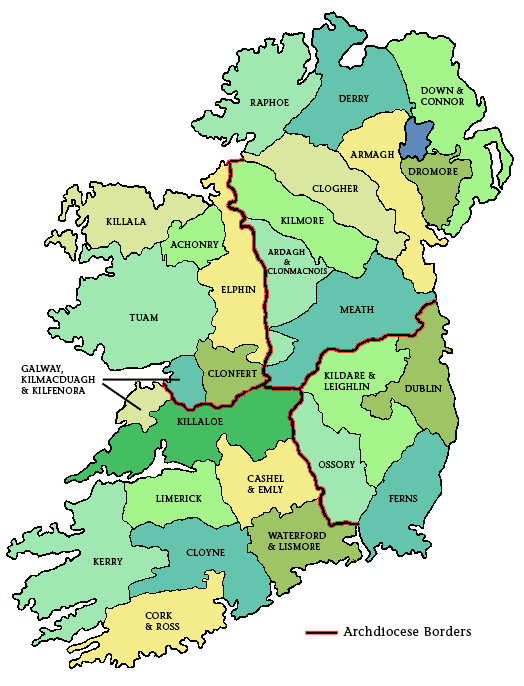
Talking of parish records, another area that can cause confusion when searching on certain websites are the diocesan boundaries. It’s sometimes easy to forget that the boundaries for a diocese don’t always correspond to the county boundaries. So parts of Cork are in Kerry diocese and some parts of Kerry fall within Cork and Ross. Most of North and East Cork is under the jurisdiction of the diocese of Cloyne and a lot of South Tipperary is part of Waterford and Lismore. This also holds true for parishes. Some parishes sit in more than one county, such as Kilbehenny which straddles Tipperary and Limerick. This is especially important if you are searching for records on Roots Ireland. I was puzzled recently as to why my search for baptismal records in South Tipperary wasn’t producing results, until it was suggested I try searching under Waterford. Suddenly I was getting a lot more information. You can check out a map of the various Irish diocese below.
When searching for ancestors we should also keep in mind the upheaval caused by the Famine. When we think of migration, we tend to imagine outward migration, of people saying their goodbyes on the quayside before embarking for a new life in America, Australia or the UK. But we shouldn’t ignore internal migration. The Famine led to depopulation and an availability of land. Should we be surprised that some took the opportunity to take land elsewhere, even if it was just a neighbouring parish?
So the lesson is to never put too much faith in our assumptions. Don’t be afraid to question received information and to independently verify. It might mean disproving long cherished family myths (which isn’t always appreciated) but the whole point research is to know for certain.
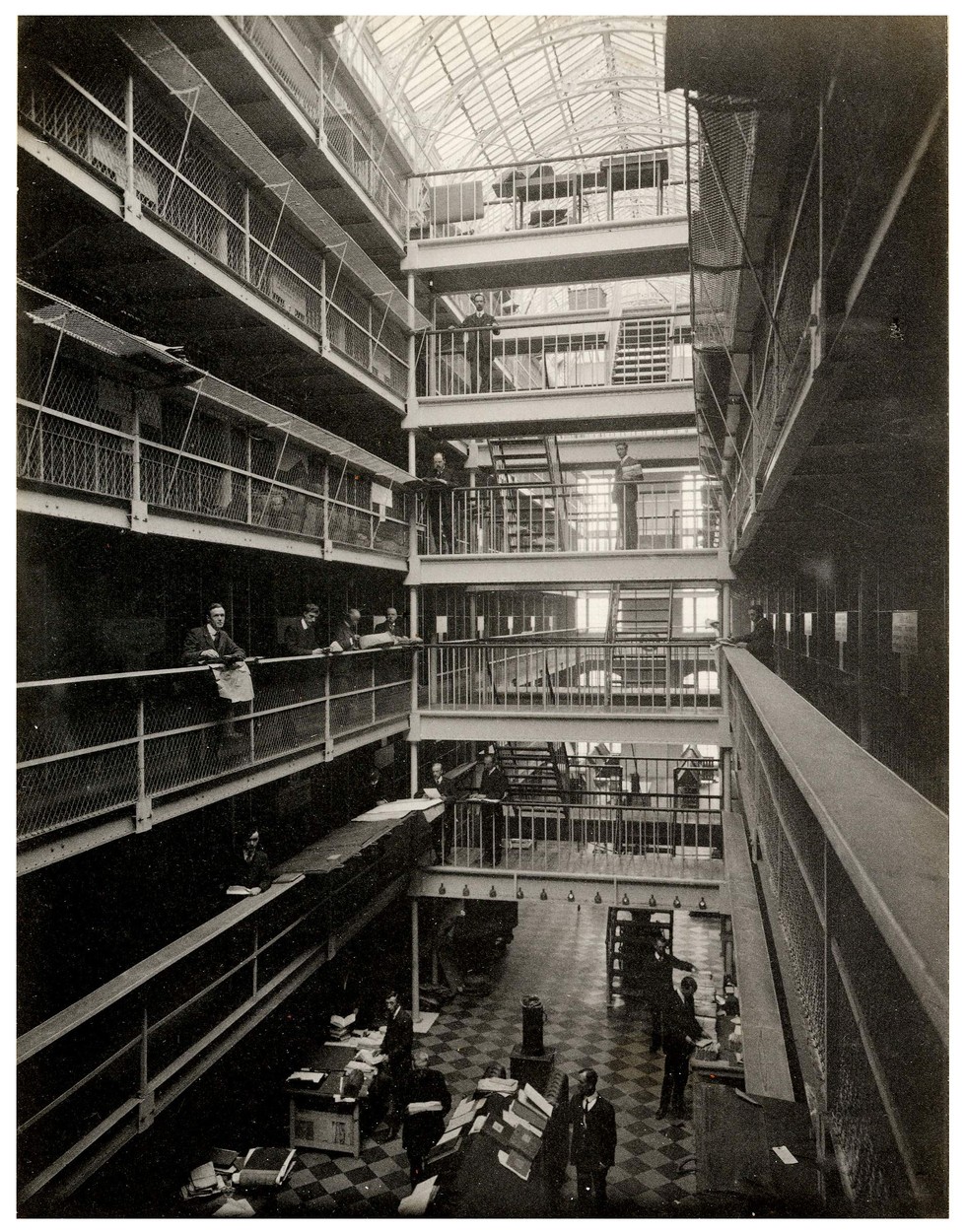
On the 30 June 1922, the Public Records Office of Ireland was destroyed by fire. This was a part of the occupation of the adjacent Four Courts by members of the anti-Treaty IRA which sparked off the Irish Civil War. The loss of centuries of records destroyed in the fire is still keenly felt by those researching their Irish family history. Details of what was lost are summarised by Claire Santry. The records lost included the pre-1901 census records, Irish wills before 1922 and a large percentage of Church of Ireland registers. Since then Irish genealogists have learned to make the best of what records that do survive.
Fortunately, technology offers us the possibility of rebuilding the destroyed Public Records Office in digital form. Beyond 2022 is a new collaboration between Trinity College Dublin, the National Archives (Ireland), the National Archives (UK), the Public Record Office Northern Ireland and the Irish Manuscripts Commission. The project aims to create a digital reconstruction of the Public Record Office and it’s holdings. According to the project website:
“Ireland’s Virtual Record Treasury will serve both as essential platform for academic research and a public resource with global reach and impact”
Over the years, plenty of surviving sources have been digitised and made publicly available on various websites. But this project will go beyond simply making more sources available. It will also create a new augmented-reality interface. Those using the site will be able to explore a virtual reconstruction of the original building. There will also be a complete inventory of lost and surviving records from the 1922 fire. While it will never be possible to completely replace all that was lost, the project will look to other repositories for substitutions.
This is an ambitious project and I will be waiting with bated breath to experience the finished result
I originally had a different topic in mind for the latest blog but reading this article about the National Library of Ireland Photographic Archive got me thinking about crowdsourcing and some of the projects out there which take advantage of it.
What exactly is crowdsourcing? According to the Miriam Webster dictionary it can be defined as “the practice of obtaining needed services, ideas, or content by soliciting contributions from a large group of people and especially from the online community rather than from traditional employees or suppliers.” Wikipedia might be the most well known example, although there is disagreement as to whether it truly counts as crowdsourcing.
Not surprisingly many genealogy and family history related projects have been keen to tap into crowdsourcing. Sometimes we do it without even realising what we are doing. One of the best examples is on social media. Many of us will have at one time or another posted an image of a difficult to read record in a Facebook group or on another platform in order to solicit help from others.
However there are a number of more formal projects based around the crowdsourcing method. Many of those who engage in researching family history, either at an amateur or professional level, will be familiar with the free website FamilySearch, which is run by the Church of Latter Day Saints. While the website is a treasure trove of genealogical information, not everything on it is indexed. As a free website there is a limited amount of resources they can devote to indexing all these records, particularly when new records are constantly being added. The solution is to allow members of the public to participate in this indexing. If you are frustrated at the difficulty in trying to locate a record on FamilySearch then one solution is to lend a hand with the indexing. That way other researchers won’t have the same problem. You can find out more here.
In Ireland, our institutions have been quick to embrace crowdsourcing. In 2011, the National Library of Ireland uploaded it’s photographic archive to Flickr, making them freely available to browse from anywhere in the world. Alongside that, the library began soliciting help from users to identify the places and people featured in the photos. I wrote a post on this collection a few years ago when discussing sporting ancestors. I would highly recommend browsing through the collection. Who knows what family secrets you might help uncover or mysteries you might be able to resolve.
The National University of Ireland Maynooth also saw an opportunity with crowdsourcing when they created the Letters of 1916 project. Launched in 2013, this was the first public humanities project in Ireland. The original goal of the project was to collect letters from 1916 and make them available online. The letters weren’t just those belonging to libraries, archives and universities. Members of the public were also encouraged to contribute their own letters from the period to the project and collection roadshows were held around the country. Once a letter has been contributed, volunteers can register to assist with transcribing. The letters cover a wide range of topics, from official government correspondence to letters of a more personal nature. The project has been such a success that it’s remit has been expanded to cover the entire revolutionary period in Ireland, from 1916 to the end of the Irish Civil War in 1923. Anyone can volunteer and it’s a great way to learn more about the period.
If you have an interest in Irish folklore, then my recommendation would be to explore the Schools Collection of the National Folklore Collection. These stories were collected by primary school children throughout the country in the 1930s and came from interviews they conducted with relatives and neighbours. The stories range from the origins of local placenames, to tales of the supernatural. Volunteers are needed to assist in transcribing the collection. It’s always worth doing because you never know what you might find. Searching through the collection revealed that some of my own relatives had been collectors.
There are many more examples of crowdsourcing projects out there and most don’t require more than an hour or two of your time every so often. Be warned though that once you start volunteering you might find yourself addicted.
Of course, crowdsourcing won’t work for every family history project and it requires effective management in order to succeed. But when it works it can be a great way for professionals and members of the public to learn more about the past.


















 Ryan Genealogical Research