When You Assume

It is natural when conducting research to rely, in part at least, on assumptions. Sometimes when the paper trail becomes patchy they are all we have to go on. But these assumptions can sometimes lead us down the wrong path. We are often told that people in Ireland didn’t move around much before the mid 20th century. That if we could trace them to a particular region then there was a good chance they had been there with several generations. However, recent research for clients and into my own family has made me rethink this.

For instance when we receive information from elderly family members we tend to trust it. That information might state the family had been present in that particular area since records began. Of course we’re going to assume this information is correct, especially if we don’t have a reliable paper trail. It makes for a good starting point in our research and can help us get further. Unfortunately putting too much faith in this information can lead to mistakes. Recently I’ve been doing research into a particular branch of my family in Tipperary, prompted by contact with DNA matches on Ancestry. I had information from my grandfather, written down several years ago, giving a year of birth and location for his maternal grandfather. It was within the same parish and seemed plausible so I didn’t see a need to question it. It was only as I went back further and started digging into the parish registers and other records that I began to realise there could be a mistake. A marriage record suggest this individual married into that particular townland. It still places him in the same parish so not a huge deal. However, looking for baptismal records for the year he was born raises questions. The only individual with that name born in that year within the county is listed as being born several parishes over. Not impossible and goes back to assuming people always stayed within the same area. However, when I searched for his death record the age was off. For those born before civil registration was introduced in 1864 sometimes they simply guessed at their age. So that’s not completely reliable either. However, looking at the census records also throws up questions. This individual is listed on the 1911 census as being born in Co. Limerick originally. All of this evidence taken together is too much to ignore and it suggests the information from my grandmother was incorrect. I can understand where the mistake came from. In the days before online research I assume my grandfather or someone else before him simply asked the local parish priest to look into it for them. He found an individual with that name in a nearby parish and assumed it must be them. This is a mistake that any of us can make and frequently do, even professional researchers.

Talking of parish records, another area that can cause confusion when searching on certain websites are the diocesan boundaries. It’s sometimes easy to forget that the boundaries for a diocese don’t always correspond to the county boundaries. So parts of Cork are in Kerry diocese and some parts of Kerry fall within Cork and Ross. Most of North and East Cork is under the jurisdiction of the diocese of Cloyne and a lot of South Tipperary is part of Waterford and Lismore. This also holds true for parishes. Some parishes sit in more than one county, such as Kilbehenny which straddles Tipperary and Limerick. This is especially important if you are searching for records on Roots Ireland. I was puzzled recently as to why my search for baptismal records in South Tipperary wasn’t producing results, until it was suggested I try searching under Waterford. Suddenly I was getting a lot more information. You can check out a map of the various Irish diocese below.

https://ryangenealogicalresearch.com/wp-content/uploads/2018/04/58739-ireland-provinces-dioceses.png

When searching for ancestors we should also keep in mind the upheaval caused by the Famine. When we think of migration, we tend to imagine outward migration, of people saying their goodbyes on the quayside before embarking for a new life in America, Australia or the UK. But we shouldn’t ignore internal migration. The Famine led to depopulation and an availability of land. Should we be surprised that some took the opportunity to take land elsewhere, even if it was just a neighbouring parish?

So the lesson is to never put too much faith in our assumptions. Don’t be afraid to question received information and to independently verify. It might mean disproving long cherished family myths (which isn’t always appreciated) but the whole point research is to know for certain.
Rebuilding The Public Record Office

https://assets.rbl.ms/2363411/980x.jpg

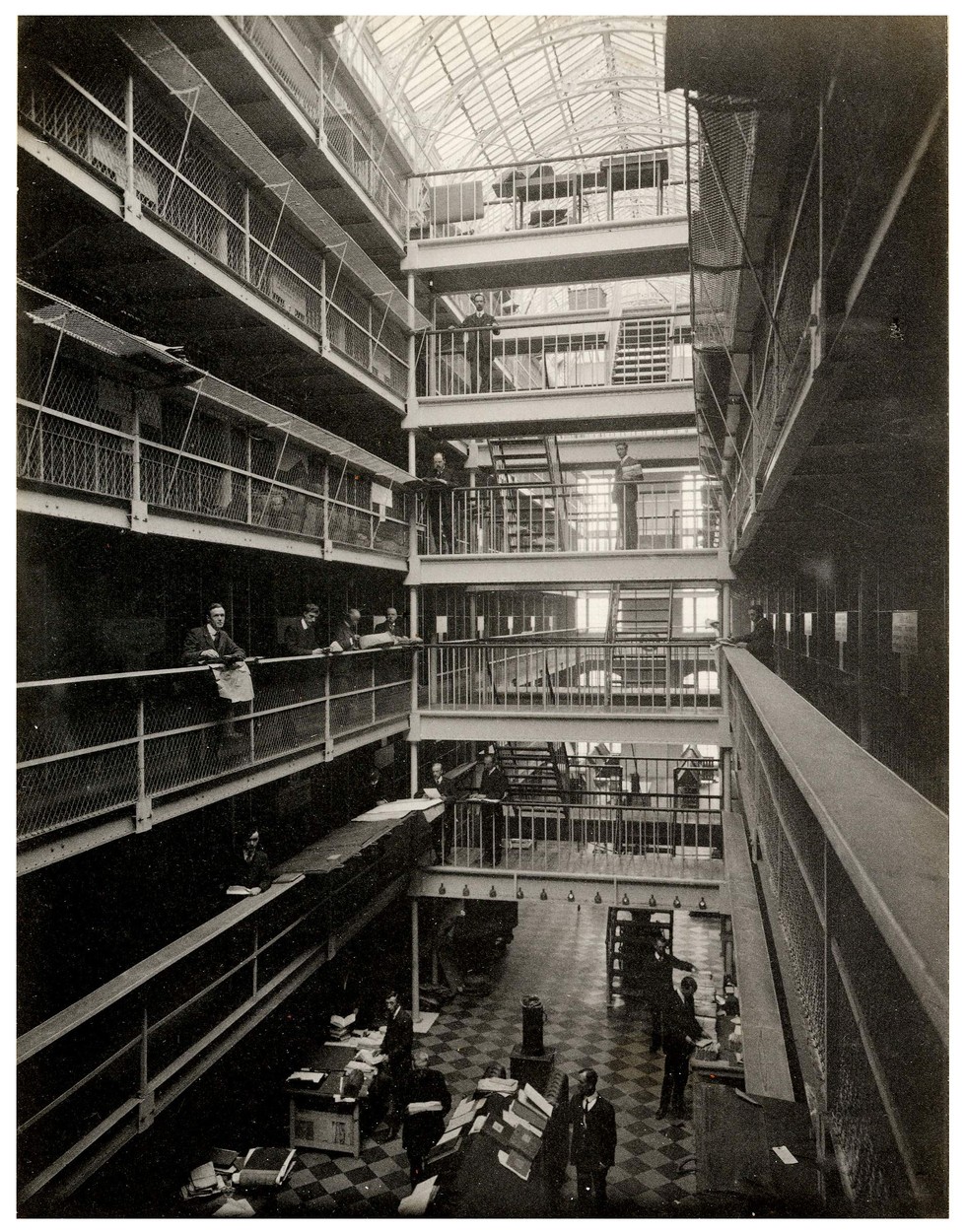
Public Record Office of Ireland

On the 30 June 1922, the Public Records Office of Ireland was destroyed by fire. This was a part of the occupation of the adjacent Four Courts by members of the anti-Treaty IRA which sparked off the Irish Civil War. The loss of centuries of records destroyed in the fire is still keenly felt by those researching their Irish family history. Details of what was lost are summarised by Claire Santry. The records lost included the pre-1901 census records, Irish wills before 1922 and a large percentage of Church of Ireland registers. Since then Irish genealogists have learned to make the best of what records that do survive.

Fortunately, technology offers us the possibility of rebuilding the destroyed Public Records Office in digital form. Beyond 2022 is a new collaboration between Trinity College Dublin, the National Archives (Ireland), the National Archives (UK), the Public Record Office Northern Ireland and the Irish Manuscripts Commission. The project aims to create a digital reconstruction of the Public Record Office and it’s holdings. According to the project website:

“Ireland’s Virtual Record Treasury​ will serve both as essential platform for academic research and a public resource with global reach and impact”

Over the years, plenty of surviving sources have been digitised and made publicly available on various websites. But this project will go beyond simply making more sources available. It will also create a new augmented-reality interface. Those using the site will be able to explore a virtual reconstruction of the original building. There will also be a complete inventory of lost and surviving records from the 1922 fire. While it will never be possible to completely replace all that was lost, the project will look to other repositories for substitutions.

This is an ambitious project and I will be waiting with bated breath to experience the finished result

Crowdsourcing

6199778183_63f627fe1d_b

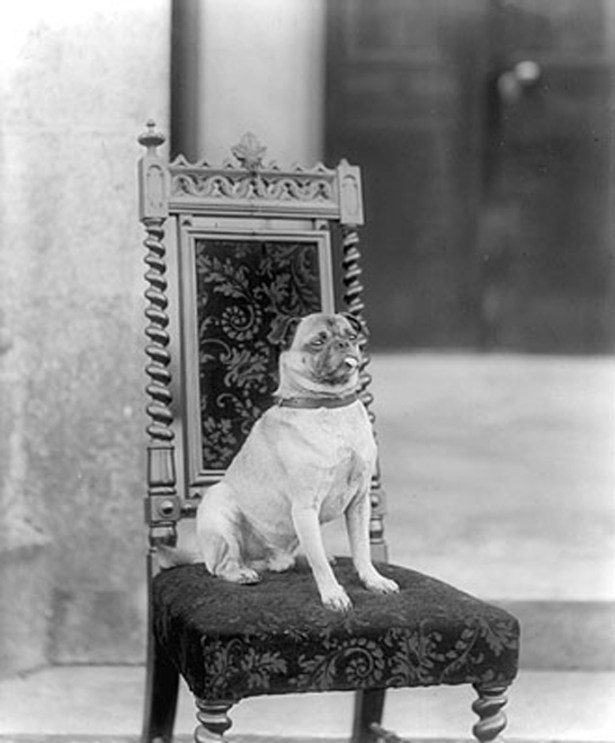
A dog living it up. Courtesy of the Poole Collection from the National Library of Ireland Photographic Archive

I originally had a different topic in mind for the latest blog but reading this article about the National Library of Ireland Photographic Archive got me thinking about crowdsourcing and some of the projects out there which take advantage of it.

What exactly is crowdsourcing? According to the Miriam Webster dictionary it can be defined as “the practice of obtaining needed services, ideas, or content by soliciting contributions from a large group of people and especially from the online community rather than from traditional employees or suppliers.” Wikipedia might be the most well known example, although there is disagreement as to whether it truly counts as crowdsourcing.

Not surprisingly many genealogy and family history related projects have been keen to tap into crowdsourcing. Sometimes we do it without even realising what we are doing. One of the best examples is on social media. Many of us will have at one time or another posted an image of a difficult to read record in a Facebook group or on another platform in order to solicit help from others.

However there are a number of more formal projects based around the crowdsourcing method. Many of those who engage in researching family history, either at an amateur or professional level, will be familiar with the free website FamilySearch, which is run by the Church of Latter Day Saints. While the website is a treasure trove of genealogical information, not everything on it is indexed. As a free website there is a limited amount of resources they can devote to indexing all these records, particularly when new records are constantly being added. The solution is to allow members of the public to participate in this indexing. If you are frustrated at the difficulty in trying to locate a record on FamilySearch then one solution is to lend a hand with the indexing. That way other researchers won’t have the same problem. You can find out more here.

In Ireland, our institutions have been quick to embrace crowdsourcing. In 2011, the National Library of Ireland uploaded it’s photographic archive to Flickr, making them freely available to browse from anywhere in the world. Alongside that, the library began soliciting help from users to identify the places and people featured in the photos. I wrote a post on this collection a few years ago when discussing sporting ancestors. I would highly recommend browsing through the collection. Who knows what family secrets you might help uncover or mysteries you might be able to resolve.

2017-11-03

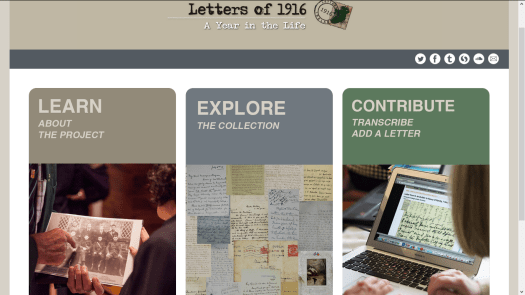
The National University of Ireland Maynooth also saw an opportunity with crowdsourcing when they created the Letters of 1916 project. Launched in 2013, this was the first public humanities project in Ireland. The original goal of the project was to collect letters from 1916 and make them available online. The letters weren’t just those belonging to libraries, archives and universities. Members of the public were also encouraged to contribute their own letters from the period to the project and collection roadshows were held around the country. Once a letter has been contributed, volunteers can register to assist with transcribing. The letters cover a wide range of topics, from official government correspondence to letters of a more personal nature. The project has been such a success that it’s remit has been expanded to cover the entire revolutionary period in Ireland, from 1916 to the end of the Irish Civil War in 1923. Anyone can volunteer and it’s a great way to learn more about the period.

2017-09-26 (4)

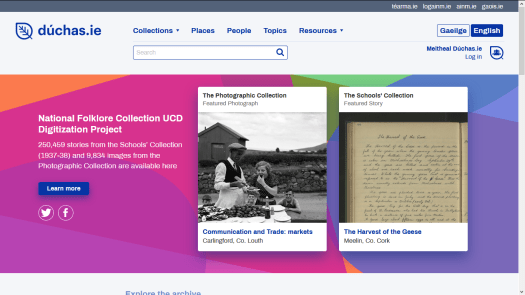
If you have an interest in Irish folklore, then my recommendation would be to explore the Schools Collection of the National Folklore Collection. These stories were collected by primary school children throughout the country in the 1930s and came from interviews they conducted with relatives and neighbours. The stories range from the origins of local placenames, to tales of the supernatural. Volunteers are needed to assist in transcribing the collection. It’s always worth doing because you never know what you might find. Searching through the collection revealed that some of my own relatives had been collectors.

There are many more examples of crowdsourcing projects out there and most don’t require more than an hour or two of your time every so often. Be warned though that once you start volunteering you might find yourself addicted.

Of course, crowdsourcing won’t work for every family history project and it requires effective management in order to succeed. But when it works it can be a great way for professionals and members of the public to learn more about the past.


A Sense Of Place

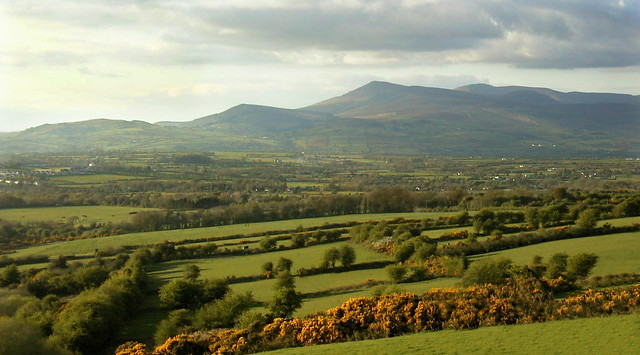
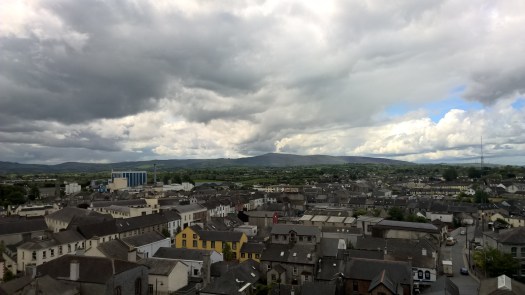
There is an often expressed sentimentality among the Irish diaspora for the ‘ould sod’ or the original homestead that their ancestors came from. It is something that those of us  living in Ireland too often dismiss or mock. We like to believe that modern Ireland has evolved beyond such concepts, that we are citizens of the world who aren’t tied down to anything as simple as a piece of land or particular homestead. But yet that isn’t quite true. While those of my generation have experienced unparalleled freedom and the ability (at least in theory) to pack our bags and move elsewhere, it is impossible to completely forego all attachments. For myself, I have spent the majority of my life living just outside Cork City. But there is still a part of me that thrills at the sight of the Galtee Mountains and feels to some extent like I’ve come home. Perhaps this is simply due to so much time spent visiting family in Tipperary and walking the region during my childhood.

https://c1.staticflickr.com/1/96/255082557_f87b522807_z.jpg?zz=1

Galtee Mountains

Equally I know friends born in Ireland and who have lived out their entire lives here who feel that home is London, Edinburgh or Paris. Our sense of home isn’t always tied to where we lived our entire lives. The next time an enthusiastic descendant of Irish emigrants comes seeking the ancestral homestead, instead of dismissing them or laughing at them, perhaps we should try our best to help them. We might even learn something ourselves in the process.

princess_grace_newport5

Grace Kelly visiting Drimurla, Co. Mayo where her grandfather originated

But how does someone go about this process? Too often many of those researching their Irish ancestry don’t have a lot to go on. Maybe they only have a surname and a vague recollection of a certain county being mentioned by elderly relatives. Sometimes they will get lucky and might have documentation such as a death certificate or passenger listing which lists the place of origin. However, even then the name can sometimes get mangled in the period between boarding the ship and arriving at the destination. This was typically down to a lack of standardised spelling of placenames and also a lack of literacy among those emigrating.

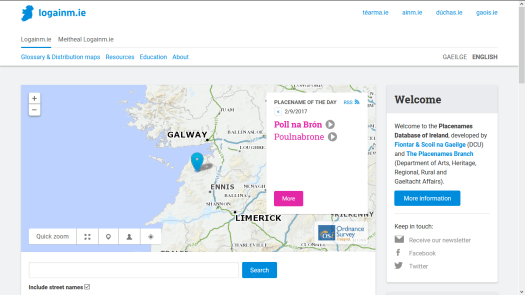
There is help at hand though. One of the best resources for tracing Irish placenames is the Placename Database of Ireland, which can be conveniently found on the Logainm.ie website. The site is very user friendly and is invaluable in trying to locate a specific Irish placename. It provides a listing of baronies, civil parishes and townlands along with streets in Irish towns. For some of these placenames it also has a helpful breakdown of how the name has evolved over the centuries. Many have kept much the same name with some spelling variations, while others have undergone more drastic transformations with the original name being lost completely.

2017-09-02

Another great resource for Irish placenames is Irish Ancestors, John Grenham’s website. Over the years John has amassed a large database of Irish surnames and placenames. His website includes maps of the various different parish types and Poor Law Unions. An invaluable resource when trying to figure out the relationship between the old Civil Parishes and modern Roman Catholic Parishes.

2017-09-02 (1)

However, one thing to keep in mind when trying to figure out where your Irish ancestors came from is the unreliable nature of mapping in the age of Google. When planning a trip to Ireland it is easy to look at a map and assume that because it’s a small country that everything must be close together. This isn’t accounting for geography, which Ireland has no shortage of. Neighbouring parishes might be separated by an inconvenient mountain range or a lake, perhaps even both. The road system was often poorly maintained or almost non-existent. The vast majority of people had to travel by foot and as such rarely ventured beyond their own own immediate surroundings. Someone born in Macroom, West Cork is unlikely to have ever set foot in Cork city. Journeys that we can now complete in hours would have taken our ancestors several days.

A very useful means of making sense of the landscape are the Ordnance Survey Ireland Maps. The first maps were produced in 1847 at a scale of at a scale of 6 inches to 1 mile. Ireland was the first country to be mapped to such a scale. In times gone by it was necessary to use the physical copies of the maps held in local libraries or purchase them from the OSI. Thanks to modern technology however it is possible to use the online map viewer to overlay the modern and historical maps. This can provide some invaluable perspective on the landscape our ancestors inhabited.

2017-09-02 (2)

Historic 6 inch Ordnance Survey map of Ireland 1837-1842

Just remember when researching your family history to underestimate geography at your peril. Also keep in mind there are no shortage of excellent publications on Ireland and it’s landscape. Before making your journey it might not be any harm to pack an old fashioned atlas of Ireland rather than relying on Google Maps and GPS to help you find your way around.


European Connections

When most of us research migration from Ireland we tend to focus on places such as the UK, Australia, New Zealand, the United States and Canada. Countries that are considered part of the English speaking world. This is probably not surprising. After all it is much easier to decipher these records when they are in a language you understand. However, a recent trip abroad got me thinking about a lesser known aspect of Irish migration to mainland Europe.

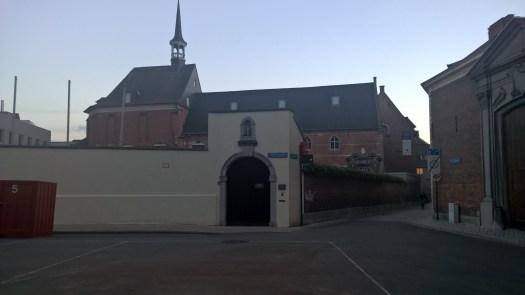
I had been selected to speak at the Society for the Study of Nineteenth Century Ireland 2017 conference. The conference was hosted by the Leuven Institute for Ireland in Europe at KU Leuven, Belgium. Leuven is a stunning medieval city located 25 kilometres (16 miles) from Brussels. I was there to speak on responses to landlord authority in South Tipperary after the Famine but being there also got me thinking about the Irish connections to Europe.

WP_20170629_22_01_33_Pro

The Irish College in Leuven

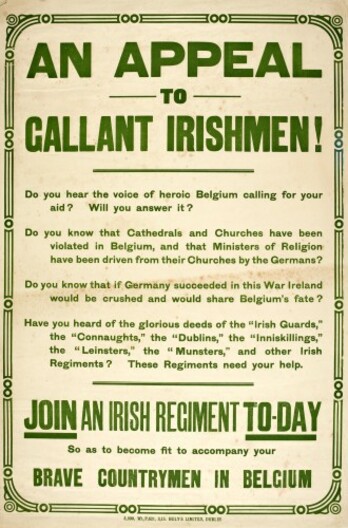
It might seem strange to have a conference on 19th century Ireland hosted in an Irish college located in Belgium. But it is easy to overlook the historic connections between Belgium and Ireland. During WW1, the German invasion of Belgium was used as a recruiting tool by the British army to convince Irish men to enlist. Comparisons were drawn with Belgium as another small, predominantly Catholic country. Countless Irish soldiers lost their lives and remain buried in the battlefields of Flanders.

http://img2.thejournal.ie/inline/385473/original?height=528

The connections with Belgium and with Leuven go back much further though. After the Reformation in Britain and the expanding Tudor conquests in Ireland, many Irish priests and nobles fled persecution and sought sanctuary with sympathetic regimes in places such as France, Spain and Belgium. The Irish College was founded in 1607 by the Irish Franciscan, Florence Conry, who was himself the product of an Irish College, having studied in Salmanca. The role of the Irish College as a focal point of Irish and European affairs was already demonstrated in the winter of 1607 when Florence Conry brought Hugh O’Neill and his retinue to Leuven following their departure from Ireland in what became known as the Flight of the Earls.

Mícheál Ó Cléirigh was the most distinguished historian of the Franciscan project in Leuven. He was born Tadgh a’ tsléibhe Ó Cléirigh in Kilbarron, Co Donegal into the learned family of Uí Cléirigh who had practised bardic poetry and history in the Gaelic tradition throughout the late middle ages. From 1626 to 1637 Ó Cléirigh travelled the length and breadth of Ireland methodically collecting and copying manuscripts. To assist him in this work he brought together three other scholars Cú Choigríche Ó Cléirigh (Donegal), Cú Choigríche Ó Duibhgeannáin (Leitrim), and Fear Feasa Ó Maoil Chonaire (Roscommon). The result was the Annals of the Four Masters, the most celebrated work of the Irish College in Leuven.

WP_20170629_11_10_52_ProWP_20170629_11_10_31_ProWP_20170629_11_10_21_Pro

Leuven was just one of many Irish colleges founded throughout Europe and many still exist to this day. The first Irish College was founded in 1592 at Salamanca, by 1611 there were twelve Irish colleges in Spain, France and the Low Countries. At its height, the network of colleges included more than 30 institutions and stretched from the Atlantic to the Baltic. This growing educational movement mirrored the increasing integration and influence of Irish migrants throughout the kingdoms and principalities of Europe. Many modern European universities have a dedicated Irish department, dedicated to the study of Irish literature and history. Some of the speakers at the conference were students of these universities and offered intriguing perspectives on aspects of Irish culture as seen from Europe.

To this day there are many descendants of those Irish who created a new life for themselves on the continent. Some became soldiers in European armies, creating dedicated Irish brigades. Others became merchants (such as the so called Wine Geese), helping to create and enhance trade routes between Ireland and Europe.

So we shouldn’t forget that the Irish connection extends far beyond the English speaking world.

WP_20170629_22_16_40_Pro

The Oude Markt, Leuven

How The Other Half Lives

As part of the recent Clans and Surnames of Ireland event in Nenagh, we took a field trip to the nearby town of Portumna, Co. Galway. The purpose of the journey was to visit the magnificent Portumna House and the Irish Workhouse Centre.

WP_20170517_15_31_59_Pro

Portumna Castle

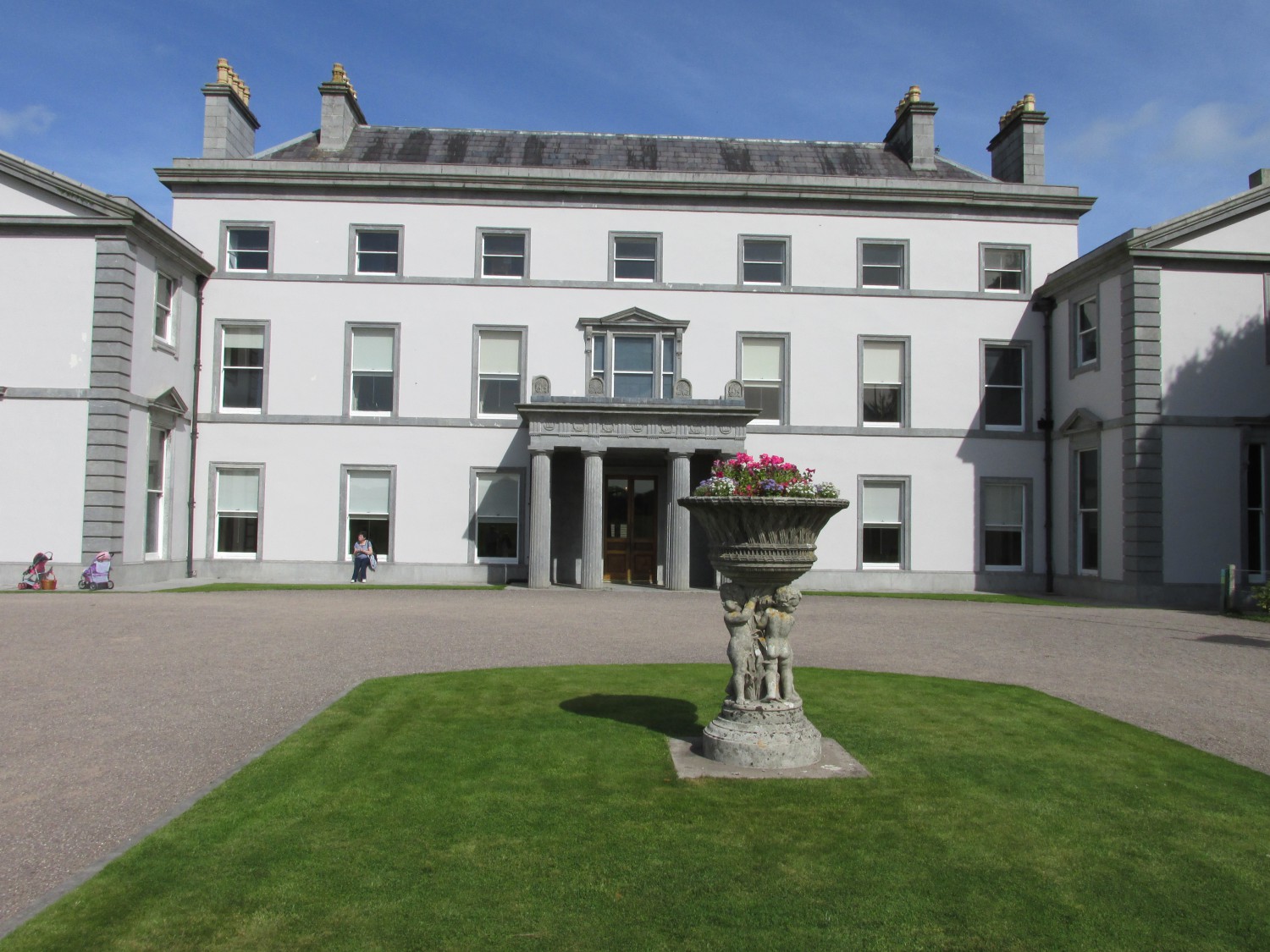
Portumna Castle is a semi-fortified stately home which was originally built in the early 17th century as home to Richard Bruke, the 4th Earl of Clanricarde. It was occupied by his descendants until a fire destroyed most of the building in 1826. The house is undergoing significant restoration by the Office of Public Works and currently the ground floor is open to visitors, along with the gardens. We were treated to a talk by the always entertaining and informative Kenneth Nicholls, who went through the history of the family.

WP_20170517_15_45_46_Pro

Map of the original floors

WP_20170517_15_46_32_Pro

Restoration work continues on the other floors

WP_20170517_16_00_38_Pro

Reproductions of family portraits

A few hours spent taking in the splendour of Portumna Castle and the gardens was impressive enough but that was followed up by our visit to the Irish Workhouse Centre, which was on the other side of Portumna.

WP_20170517_16_40_25_Pro

Irish Workhouse Centre, Portumna

It’s certainly difficult to find a greater contrast between the splendour of Portumna Castle and the grim reality of the nearby workhouse. Going from one to the other, even on a bright sunny day, can be particularly jarring.

WP_20170517_16_57_43_Pro

Toilets in Portumna Workhouse

Plenty has been written on the horrors of the workhouse system in Ireland and the squalid conditions that those unfortunate enough to end up there had to endure. It should be noted that the workhouse in Portumna wasn’t among the worst of these institutions. It was built after the Famine, mainly to take some of the overflow from other workhouses in the region. However, conditions inside were far from pleasant. Families entering the workhouse were separated, with little hope of seeing each other again. This included taking children from their parents. Often the only escape was through emigration.

WP_20170517_18_03_16_Pro

Sleeping quarters in the workhouse

The workhouse and the stately home might seem to exist in completely separate worlds but they were closely linked. The landlord of the area, or one of his representatives, often served on the Board of Guardians for the workhouse and would have plenty of influence on the conditions endured by it’s residents. Not least in paying for assisted emigrations, which offered an escape from the workhouse. What caught my eye during the visit to Portumna was in the room once used by the Board of Guardians for their meetings. The windows allowed plenty of light in, however the window facing out into the interior courtyard (where the residents would have gathered) was high up on the wall. This meant that while the room was lit, those meeting in the room didn’t have to concern themselves with any views of the abject poverty on the other side of the wall.

Although many records concerning admissions to workhouses in Ireland have been lost, many of the minutes for the Boards of Guardians still survive in local archives. You can find a list of workhouses in Ireland and the location of surviving records here.

When researching your family history it is worth remembering to look at both sides of the social spectrum in order to fully appreciate the times they lived in.

Maximising Your Family History Research

WP_20170518_11_35_10_Pro

View of Nenagh from the top of Nenagh Castle

I’m not long back from a great week of genealogy at the Clans and Surnames event held at the  Nenagh, Tipperary. The event was run by the esteemed Lorna Moloney of Merriman Research and involved a week of talks, outings to Portumna, Co. Galway and family history consultations from professional genealogists such as myself. I delivered a talk on the first day of the event titled “Maximizing Your Family History Research: Tracing Your Regional Ancestry”. This talk was delivered mostly off the cuff, without any detailed notes, and no PowerPoint presentation. However, I felt that it might be helpful to put together some of the main points from the talk for anyone who is interested. Some of what I’m about to say may seem obvious but all too often it is the obvious which can trip us up.

My first piece of advice for anyone researching their family history is to discover what they can from their own family before going online. How far back is the Irish connection? Which particular surnames connect you to Ireland? Write all this stuff down and keep it with you. That way if you get an opportunity to dive in your research you will know where to begin.

Don’t put all your trust in genealogy websites. This is not meant as an attack on these particular services, far from it. The various online databases have made a massive contribution to genealogical research and cut down on the amount of time it takes to do research. However, like Google or any other search engine, these websites exist to tell you what is there, not what isn’t. They won’t tell you that a particular record set has a specific gap for the area where your ancestors came from. Instead they will aim to provide you with the closest match. Any online transcription is also prone to errors. Some were transcribed by people who were unfamiliar with the idiosyncrasies of Irish spelling or came from a faded microfilm copy of the records, rather than from the original source. For these reasons it is important to double check and cross reference with other available sources. Hopefully no one database has exactly the same errors as every other. One mistake could have major consequences for your research and cost you years of work.

When searching for your Irish ancestors, familiarise yourself with the historical geography of Ireland. The different types of administrative division can seem confusing at first, especially trying to differentiate between civil and ecclesiastical parishes and wondering what a townland is. But it is impossible to avoid these terms and fortunately there are some excellent books and websites out there that help explain how these different divisions functioned.

Be mindful of distances. It’s easy to look at a modern map of Ireland and assume that your ancestors could have travelled throughout the county or traversed half the country in a single day. The reality is that most of our ancestors probably never travelled further than the neighbouring parish until the early 20th century. This is important to remember if you know your ancestors came from West Cork or Kerry, but you found someone with a similar name in Dublin a year later, and then have your ancestors back in the home parish immediately afterwards. It’s not impossible that this could be your family but ask yourself how would they have travelled such a distance in a time before paved roads, cars or public transport? The majority of Irish people at this time were farmers, who may have been lucky to own a horse and cart. The terrain in many parts of the country wasn’t easy to traverse and many rural roads were even worse than they are now.

There is no substitute for local knowledge. Not everything is online, or at least not with the big websites. Even when they add so many thousands of individual records regularly, they will never get everything. It is often assumed that anything that wasn’t lost in the 1922 Public Record Office fire, must be held in Dublin. That is far from the case. Ireland is fortunate to have an excellent network of county libraries and archives. While not all of them have an abundance of online resources, that doesn’t mean they should be discounted. Once you’ve narrowed the search for your ancestors to a particular area and feel you can’t go any further, why not check to see what is available locally. Perhaps land records, newspapers or street directories held by the local library or archive will provide you with the information you’ve been searching for. Local historical societies are also worth contacting. Perhaps someone transcribed a now lost record set. It can also be worth contacting the parish your ancestors came from directly. Perhaps some registers survive which weren’t included in the National Library microfilms or were simply missed when these records went online.

That being said, there is a lot of valuable information contained in the National Library of Ireland and the National Archives. Only a fraction of their collections are online and they contain a lot of other records which may not seem relevant to your family history at first glance. But they might provide you with some useful context for understanding how your ancestors lived.

DNA can be helpful for getting around brick walls, but it is best used in conjunction with the paper records. It can also create more confusion if all your research tells you that your ancestors came from one part of Ireland but your DNA is matching strongly to another area. This is why double checking your research is important.

The most important lesson is persistence. Genealogy is a marathon, not a sprint. Even professionals run into occasional brick walls. As frustrating as it is, don’t lose hope. There is always a possibility of a new record set appearing which provides you with that elusive clue or maybe just stepping back for a bit to recharge will bestow a sudden flash of inspiration. Perhaps fresh eyes might spot something you overlooked. Some ancestors may always be out of reach, but you can still try to understand the history of the period they lived in. No matter what obstacles you encounter, remain positive.


Get Your DNA On

Today is National DNA Day. April 25th commemorates the successful completion of the Human Genome Project in 2003 and the discovery of DNA’s double helix in 1953. It’s a day given over to learning more about genetics and genomics. For genealogy it’s also an opportunity to pick up some great deals on the various DNA kits available.

Basic RGB


You can find a list of the various sales available from the various genetic genealogy providers here

https://nationaldnaday.com/dna-day-sales/

But if you’re not already familiar with DNA testing for genealogy what do you need to know? What are the differences between the various tests?

The most common test (and the most affordable) available from most of the providers is the Autosomal test, otherwise known as the Family Finder test. It tests back along both the male and female line. It can also provide clues to the ethnic background of the tester. However, this should always be taken with a certain amount of caution. There are any number of variables which can skew the test and sometimes the different providers will provide a tester with very different results. Autosomal tests also have a limited range, only been accurate within seven generations.

2017-04-25

Ethnic breakdown from Family Tree DNA autosomal test

What makes autosomal testing so useful for genealogy however is that it can provide you with direct matches to potential cousins. This can be particularly helpful for getting beyond those pesky brick walls if you can connect to someone who might have been able to progress further in their own research. If you want to narrow your results to a particular branch of your family then a helpful strategy is to test a relative connected to you on that branch. For example if you wanted to find more connections on your paternal line, then ask a first cousin or uncle or aunt, to take the test also. You can then compare any matches in common. Similar can be done with second cousins for information on great grandparents and so on.

If you are curious about the origin of your surname or looking to go back further along the male line, then the test to take is the Y chromosome test. The Y chromosome is passed down along the paternal line from father to son. As such only men can take it because women don’t inherit that piece of DNA. This test can go back much further, roughly 1000 years, hence why it is so useful for tracing the origin of a surname. From my own experience though, it might not tell you a whole lot if you have a common surname like Ryan. Another limitation is that the test won’t necessarily help you find close cousins.

For those looking to trace the origin of their maternal line, they can take the mitochondrial DNA test. Mitochondrial DNA is inherited along the female line for both men and women. It also doesn’t mutate at the same rate as other types of DNA and can be traced back much further. However, because women often change their surname when they marry, it has limitations if you are trying to connect with a specific individual. However, one interesting use of mitochondrial testing in recent years was the identification of the remains of executed 1916 leader, Thomas Kent. By taking a sample of mitochondrial DNA from his surviving nieces, they were able to confirm his identity.

If you are looking for more information on DNA testing then the video below should be of help

There are also plenty of other great articles and blogs out there. You can also find some excellent videos on personal experiences with DNA testing for genealogy on YouTube, courtesy of Genetic Genealogy Ireland.


Upcoming Events

It’s going to be a busy week. As part of the annual Cork Lifelong Learning Festival I am fortunate enough to be delivering two free talks, both in the surrounds of the lovely St Peter’s on North Main Street.

WP_20161216_14_27_26_Pro

St Peter’s Cork

The first talk will be on Thursday April 6th at 4pm. I will be representing Cork Decorative and Fine Arts Society for a talk on church memorials and monuments in Cork. This will look at some notable monuments from the city and county and the families commemorated on them.

On Saturday from 2pm to 4pm I will be delivering my first solo genealogy workshop. The goal of this workshop will be to provide attendees with an introduction to Irish genealogy and the main sources. I will also be discussing the increasing use of DNA in genealogical research. At the end there will be an opportunity for people to ask questions about their own family history research.

I always enjoy doing these talks because while it is nice to help people with their own family history, it is also an opportunity for me to learn something from the audience. That joy of mutual discovery is one of the many reasons I enjoy genealogy.

Secret Family Histories

What’s your family secret? We all have one. That skeleton in the closet that we can’t help but be fascinated by, despite the refusal of other family members to acknowledge their existence. Sometimes it can be something personal, an addiction or an illness that was always referred to euphemistically. Perhaps it could be the lack of a marriage certificate, or the date of the wedding coming a bit too close to when the first child was born. Then there are the other types of omissions, the ones that might have resulted from an ancestor being caught on the wrong side of history. Every country has this because it is human nature to try and simplify our historical narrative. This side was ‘good’ and the other side was ‘bad’.

With the Decade of Centenaries in Ireland and all the various discussions taking place, it is easy to assume that Ireland has put all our historical hangups behind us. That we have learned to accept our past and any of the uncomfortable truths hidden there. To some extent this is true. Irish soldiers who fought in WWI now get the recognition they deserve for their bravery and sacrifice. While those who served as members of the pre-independence police forces haven’t been rehabilitated to the same extent, their role in Irish life during the period is better understood.

26931112476_c167afe576_h

Group of Royal Irish Constabulary officers and men (Image courtesy of National Library of Ireland)

I have come across some of this myself when looking into my own family history. Most of my maternal side of the family would have considered themselves to be of Irish Republican lineage. However, that wasn’t the case for everyone in the family. I had one great uncle from Co. Waterford who had served in WWI and was also a constable in the Royal Irish Constabulary. He was stationed in Co. Wexford where he died in 1921 during the Irish War of Independence. His death wasn’t particularly glorious, being accidentally shot by a fellow constable while on patrol. To me and some of my cousins this proved fascinating, but other members of the family weren’t as interested. Perhaps because his role as a servant of the British administration in Ireland during a contested time doesn’t fit with how the family see themselves. This is not to criticise. It is simply who they are. All of us have our inbuilt biases.

zzzgermanwwiisoldiersinireland1_large

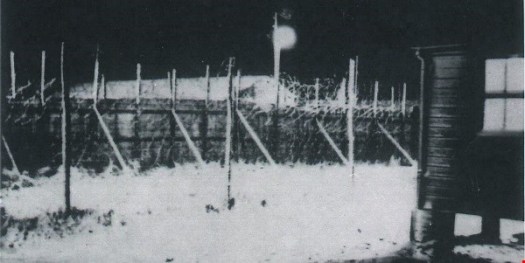
Exterior of the Curragh Internment Camp in the 1940s (Image courtesy of Irish Examiner)

A recent visit to the National Archives of Ireland also put me in mind of another aspect of Irish history that is often overlooked and it’s connection to my own family. Ireland maintained an official policy of neutrality during WWII, although a number of Irish did enlist with the British army and the armed forces of other Allied forces. On the home front there were those who believed in the old maxim that Britain’s difficulty was Ireland’s opportunity. The IRA launched a bombing campaign in Britain. In order to maintain their position of neutrality, and avoid a potential invasion by Britain, the Irish government felt the safest course of action was to intern all those suspected of IRA membership. This was certainly not the first or last time such a policy was carried out on this island. The internees were placed in a camp in the Curragh, nicknamed ‘Tintown’. Among those internees, was my grandfather, his brothers and some of their friends. My grandfather never liked to speak of his time in the Curragh and it is a period rarely discussed in Irish history. I suspect there is a certain shame when it comes to the history of internment without trial.

This being my first research visit to the National Archives, I wasn’t entirely sure of how I would find the appropriate records. Were they considered criminal records? Or were they military? Or perhaps they fell under another category entirely? I guess I’ve been spoilt by the easy access to online catalogues. I approached the archivist on duty and sought her help. I think it shows how rarely these records are consulted that it took her some time to figure out what they were held under. We eventually located some of the records related to the Curragh under the Department of the Taoiseach. Although I didn’t locate anything specifically connected to my grandfather on this visit, I did come across one illuminating account of how order was maintained in the camp. Some of the guards carried guns and during one particular disturbance, they opened fire on the internees. A number were injured and one died of his wounds not long afterwards. I don’t know if my grandfather was present for this disturbance or if he had any involvement in it. I can tell I have more research to do and I have become curious about delving into this period. If anyone reading this does have more information or photos of internees from the period, please send me a message.

All of this has made me realise that genealogy doesn’t stop within recent memory. Just because we knew a previous generation, doesn’t mean that there is nothing more to uncover. Sometimes these secrets may be uncomfortable but that is the inherent risk with delving into our family history.