Sporting Ancestors

Sundays Well Tennis Club

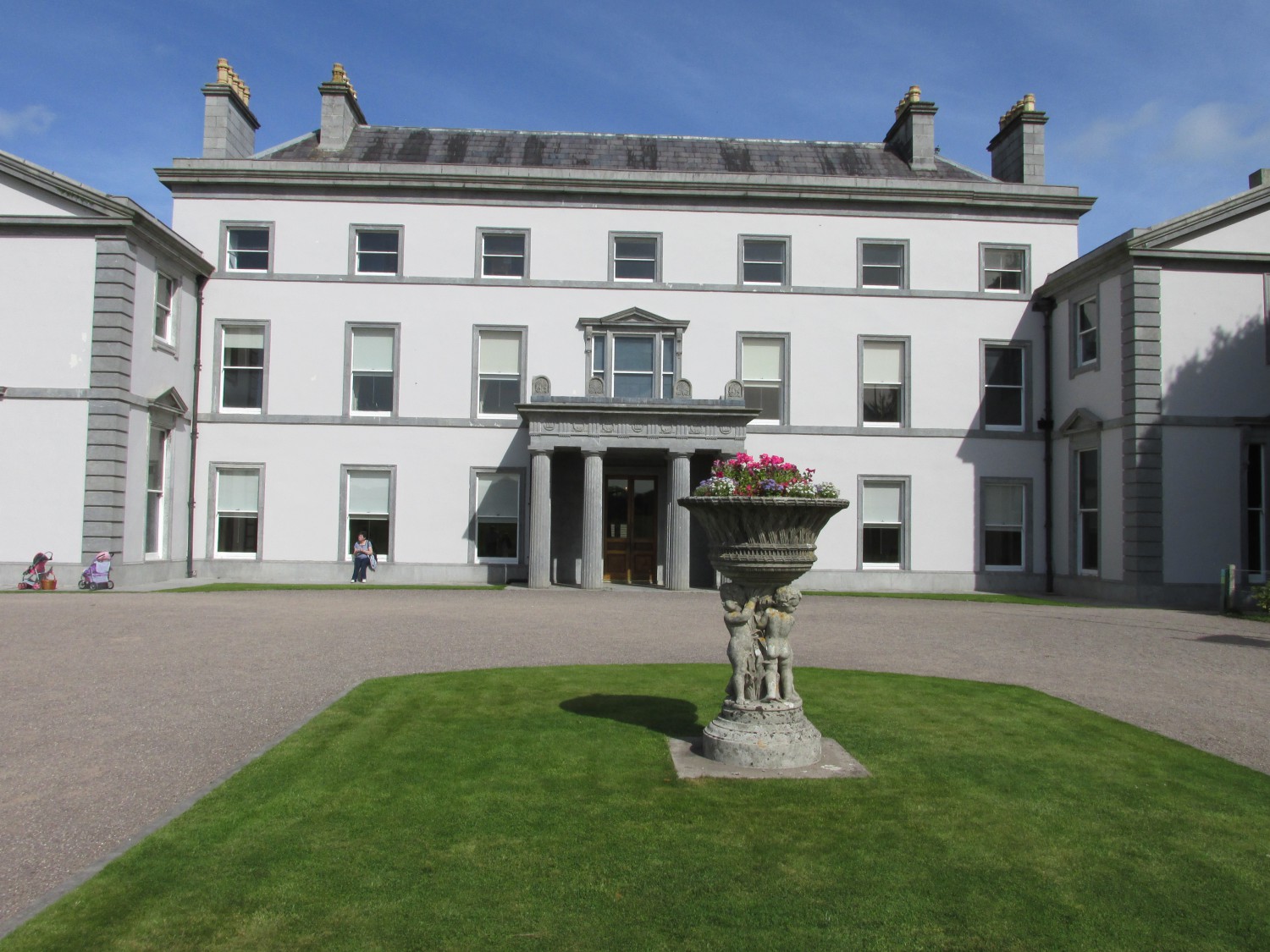
I was invited recently to deliver a talk on researching Cork ancestry to Sundays Well Boating & Tennis Club. Located near Fitzgeralds Park and University College Cork, I must have passed it a number of times without realising it was there. The club have a monthly Circle Group get together for older and retired members and often invite someone in to give a talk. I was honoured to receive such an invitation, especially when I realised the long history the club has in Cork. The talk was very well received and as is often the case, talking to some of those in attendance afterwards, I learned quite a bit from them. One gentleman in particular had put together a large booklet on his family history and had even taken a number of DNA tests from 23andMe.

One perk of giving the talk was being introduced to the long history the club has in Cork. Founded in 1899 it still has a collection of records dating back to it’s founding. Names of chairmen from it’s founding are on plaques dotted around the clubhouse. Looking at them I could see plenty of familiar Cork names, even a few I would have come across when researching the history of Christchurch. I was also presented with a fascinating book on the history of the club.

All of this got me thinking about sports clubs in terms of genealogy. It’s an area we rarely think of and yet Cork has such a long and proud sporting history. From tennis, rugby, cricket, golf, soccer and of course GAA. The second ever meeting of the Gaelic Athlethic Association was held in the Victoria Hotel on St Patrick’s Street in the heart of Cork City on December 27th 1884. Although the hotel itself has long closed, a plaque still remains on the corner commemorating this meeting. Cork has also produced a number of celebrated boxers and athlethes.

Boxer Mick Leahy

With this level of sporting activity in Cork and throughout Ireland as a whole, it’s not hard to imagine that our ancestors might have been involved with a sporting club in some capacity. Sporting clubs provided (and often still do) a social outlet for people of all backgrounds. Our ancestors might also have helped out in the form of caretakers, groundskeepers or may have even been committee members. Genealogy is about more than just gathering names, for most people it is about learning what sort of lives their ancestors lived. Quite often some records will survive. If the club is still in operation, it’s no harm to check with them to see what they might have. Perhaps one of their members has taken on the role of archivist.

For those clubs that no longer operate or don’t have their records, its possible some information might survive with the Local Studies department of the library. If you are extremely fortunate, the club might have even handed over their records to the local archives. Cork City and County Archives for example holds many of the records from Cork Constitution Rugby Club, which had been founded in 1892 by members of the Cork Constitution newspaper. While the newspaper itself ceased publication in 1924, the rugby club has continued to operate. The archive collection also has plenty of other material connected to sporting activity in Cork, including a number of diaries that describe sporting events. The National Library of Ireland have put many of their old photos on Flickr and it’s worth browsing through their photos of sporting events, even an informal kickabout by a group of workers on their lunchbreak.

Winning oarsmen at Waterford Boat Club c. 1885 from the NLI collection https://www.flickr.com/photos/nlireland/6078681751

Local newspapers will also often have recorded details on sporting events. In some cases they might even have a full list of the players on each team or perhaps photos of the teams. In some cases websites like British Pathe might have video footage from sporting events. Youtube is also a great source for historic footage.

Sporting records might not seem like the most obvious of genealogical sources but they can be worth delving into simply for what they can tell us about how our ancestors lived their lives. In the days before television and the internet, sport was one of the most popular ways for people to spend their leisure hours and our ancestors would have been no different.

A Genealogical Embarassment Of Riches – Part 2

There was some very good news for Irish genealogy recently with the release of the Catholic Parish Registers from the National Library of Ireland on July 8th

                                          National Library Of Ireland

Previously these records had only been available to consult in the Catholic churches directly or on microfiche in the National Library of Ireland. They were also available on the paid site Roots Ireland.

But why are these records so important for researching in Ireland?

Ballyporeen Parish Record

Ballyporeen/Templetenny Parish Record Excerpt

As I have mentioned in previous blog posts no census records survive prior to 1901, with the exception of some fragments from various 19th century census. Civil Registration for Catholics was only introduced in 1864 and the Public Records Office fire of 1922 has meant that many other records have been lost to us forever. Surviving records such as Griffiths Valuation and the Tithe Applotment books were never meant as census records and typically only list the head of household.

The Parish Registers on the other hand in some cases go back as far as the 18th century, which is much further than most have been able to dream of tracing our family history so far. There are a number of caveats which need to be kept in mind when using these records though.

  • Only baptisms and marriages are covered. Records of Catholic burials weren’t kept up until the early 20th century.
  • The registers kept by the National Library in most cases only extend as far as the 1880s. For anything later than that researchers will have to consult with the individual parishes.
  • The registers are not indexed or searchable. While it’s only a matter of time before one of the big genealogy companies, such as Ancestry or Findmypast gets around to doing this, in the meantime consulting the registers means scrolling through each set of records to find what you are looking for.
  • The handwriting can also prove to be an initial stumbling block. Some people have described it as spidery. Compared to modern handwriting it takes a lot of getting used to.
  • The use of Latin names can also lead to some confusion. Remember this was at a time long before Vatican II, when Latin was still used for nearly everything in the Catholic Church. It’s worth searching online for a good list of Latin names and their English equivalents when examining the registers.
  • Some parishes are missing. When the registers were initially being photographed back in the 1950s some were missed due to human error. This will happen with any transcription of records to another medium. There were also parishes that simply did not exist at this time and only became seperate entities later on.

That being said these records are still an amazing rescource. It’s obvious that a lot of thought went into the website design to make it user friendly. You can type the parish name into the search box or zoom in on the map to locate it. The records themselves are clear and legible. You can zoom right in and adjust the contrast settings if a particular page is difficult to view. When you open a record you can also go straight to a particular year, which is a huge bonus given how many baptisms and marriages took place in a typical year. Once you locate your ancestors in the register you can download a copy of that specific page.

There are also some ways to make searching easier. It might sound counter intuitive but when you first start, look for a date you already know about. If you have a specific date for an ancestors marriage or baptism then try to find that first. It will give you an opportunity to understand the layout of the registers and to get used to the handwriting.

There were some concerns from some of the Local History Centres, who run the Roots Ireland website, throughout Ireland that making these records freely available would inevitably mean the end of their business. Up until now they had been the main repository for transcripts of the registers. However it is my belief that the opposite will happen. For a lot of visitors to Ireland looking to trace their ancestors, these centres will still be one of their first stops because they hold transcripts of the records and because of their local knowledge. A subscription to Roots Ireland can also be helpful for using their transcripts in parallel with the registers.

The online registers might not be perfect but they are an amazing resource and hats off to the National Library for all their hard work and dedication in getting them online. The future of Irish genealogy is looking very bright and I wonder what other previously inaccessible records we can look forward to.

You can find the registers online at http://registers.nli.ie/

Ancestral Connections and Dromana 800

The Ancestral Connections UCC Genealogy Summer School is over for another year and what a fantastic school it was. Each year the programme becomes more ambitious and expansive. There far too many great speakers for me to list all of them so I will have to stick to a few honourable mentions.

Volunteers and attendess at the Ancestral Connections 2015

Volunteers and attendess at the Ancestral Connections Summer School 2015

Eileen O’Duill and her husband Sean always help launch the school on the Sunday evening and provide the first full day of talks. It should be required for anyone embarking on researching their Irish ancestry to sit down and chat with both of these lovely people for a few hours. No matter how daunting and scary Irish genealogy can appear, Sean and Eileen provide such great advice that can make finding even the most elusive of ancestors seem possible. They are also fantastic storytellers.

One of the most enjoyable aspects of the school are the day trips, where we get an opportunity to put what we have learned in the talks to use in the real world. One of these day trips involved a visit to the lovely town of Youghal. Being genealogists, our first stop had to be a graveyard. Doctor Jane Lyons and John Nangle were our experts on interpreting gravestones.

Dr Jane Lyons and John Nangle guiding us through graveyard research

Dr Jane Lyons and John Nangle guiding us through graveyard research

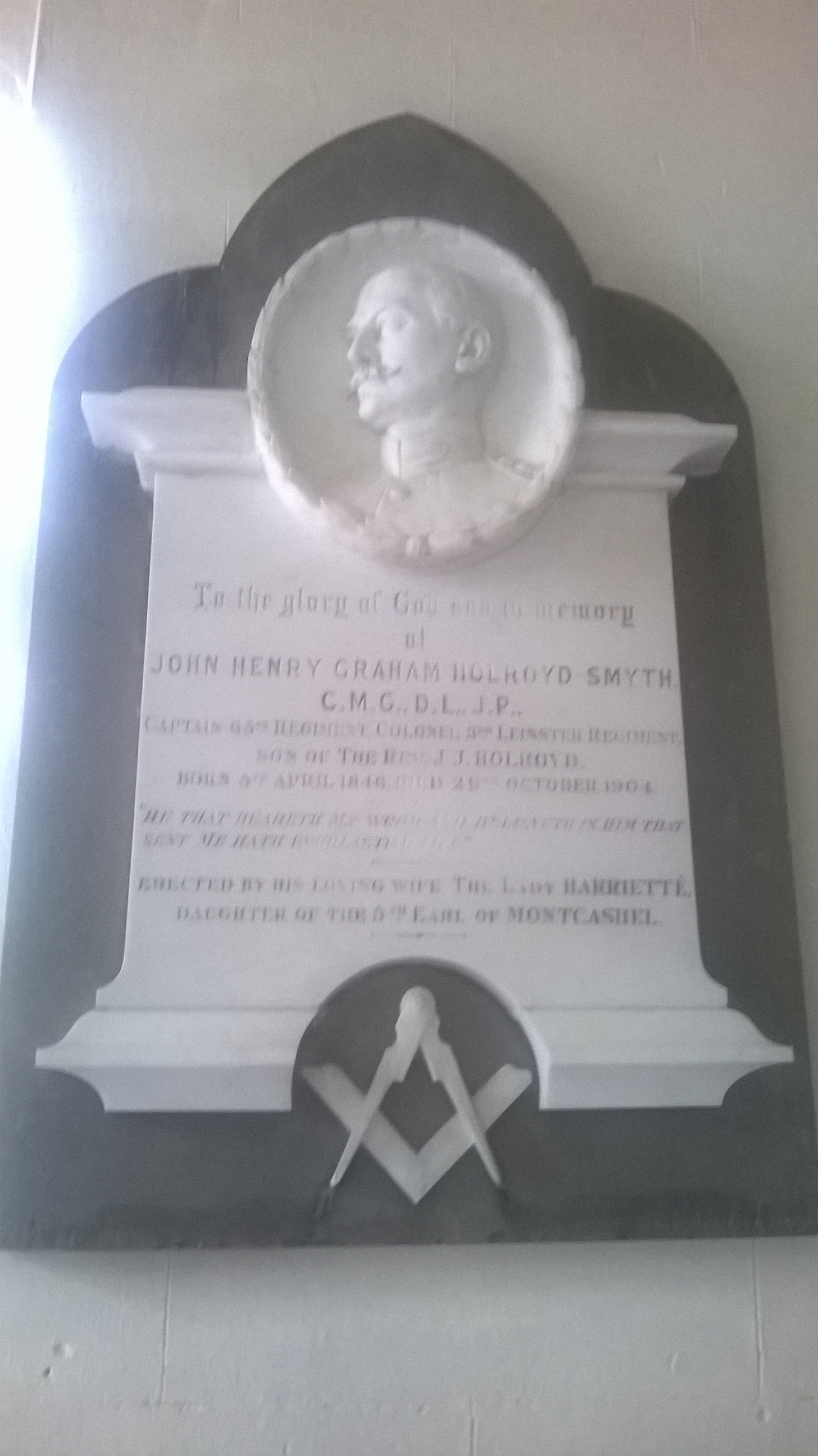
We also took the time to look around the church itself, which I would recommend for anyone visiting Youghal. Rosaleen Underwood provided us with some history on the fantastic Boyle tomb located in one of the wings of the church. There were also plenty of intriguing memorial plaques along the walls.Youghal Masonic Plaque Youghal Memorial Plaque

Once we were done with graveyards it was on to the Walter Raleigh Hotel for a mouth watering talk by food historian Regina Sexton on what our ancestors ate. Fortunately it wasn’t too long a wait until dinner.

Some of the other notable talks included Steven Smyrl on Probate Genealogy. An extremely important area. Stuart Rosenblatt filled is in on researching Jewish ancestry in Ireland, which also revealed some sources on tracking immigrant ancestors. We don’t always take into account that Ireland has been much more multicultural in it’s history than we realise.

My own talk on interpreting memorial plaques and monuments was the final lecture of the school on the Friday. Since there was an optional tour of UCC campus at the same time I was asked to deliver the talk twice. Fortunately it was well received both times. The actual last day of the school itself involved a trip down to Cobh, Midleton and Cloyne.

It was my first time visiting Cobh Heritage Centre and I found it to be extremely impressive. More than simply about the much celebrated links between Cobh and the Titanic, it also covers much of the maritime history of Cobh along with the history of emmigration in the area.

Cobh Heritage Centre

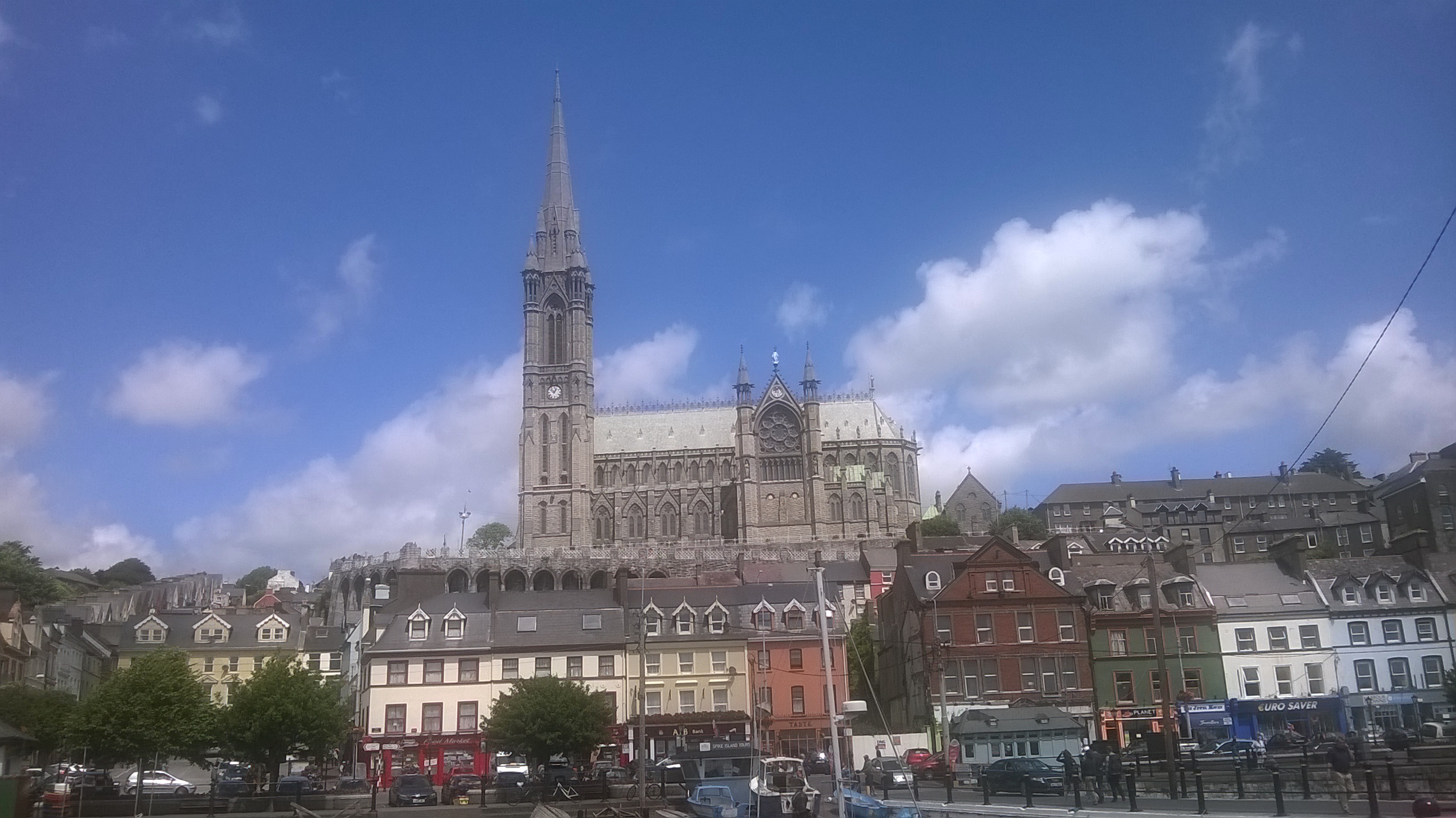
We also spent some time in St Colman’s Catholic Cathedral, which overlooks the town. An awe inspiring building inside and out. We then spent some time out on Spike Island, billed as Corks own Alcatraz.

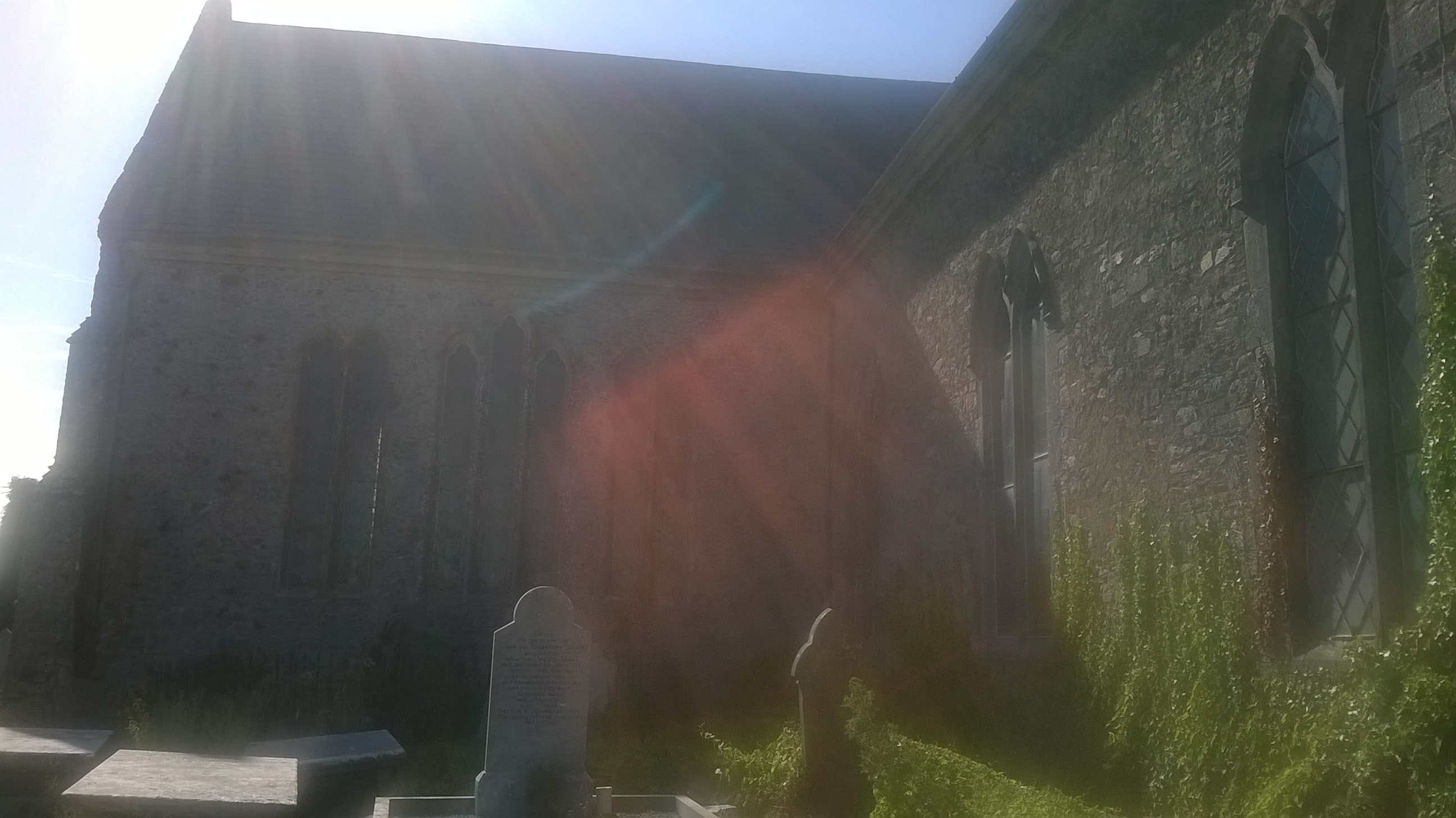
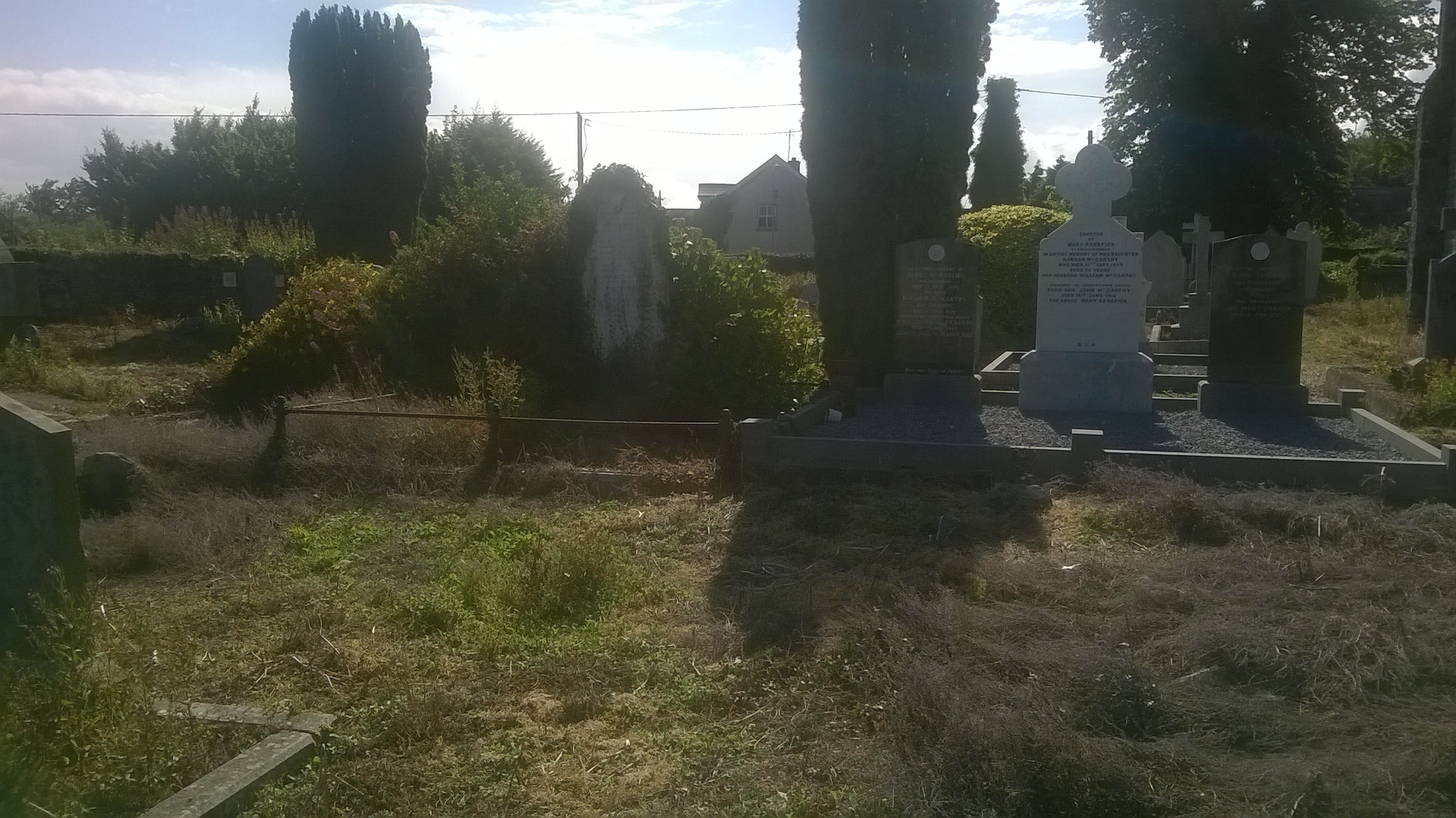
St Colman's Cathedral RCSome of our group opted to visit Midleton Jameson Distillery while everyone else decided on Cloyne to see the other St Colman’s Cathedral in Cloyne. This is the COI Cathedral for the diocese and medieval in origin. It still contains much of it’s medieval character and has a wonderful historic graveyard. The round tower also still stands, although it’s missing a roof due to a lightning strike in the 1700s.

WP_20150704_068 WP_20150704_069 WP_20150704_058 WP_20150704_062Even with the Summer School over there was little time for rest. The following day, Sunday July 5th I was among a group of genealogists with Irish Ancestree providing genealogical consultations in Villierstown, Co. Waterford for the Dromana 800 festival. Villierstown Church VillierstownWe met some lovely people down there and got to put our knowledge of genealogy into practice. The always fickle Irish weather even cooperated for the most part.

Planning has already begun for Ancestral Connections 2016 – Roots To The Rising and the preliminary programme should be announced shortly.

Ancestral Connections

Tomorrow sees the start of the ACE Genealogy Summer School: Ancestral Connections: Names, Places & Spaces in University College Cork. This is an annual summer school organised by genealogy Lorna Moloney and has been running since 2013

Ancestral Connections Poster

I have been acting as a volunteer since the summer school began and it’s gratifying to see it grow each year. Last year there were roughly 50 delegates in attendance for the entire week, with others attending for one or two days. The delegates come from all over the world and is a testament to the spread of the Irish diaspora.

The range of speakers covers a huge variety of topics concerning Irish genealogy, from land records, workhouses, adoptions, military and graveyards to list only a few. There are also a number of field trips to allow the delegates a chance for some fresh air and to explore the Irish scenery.

This will also be my first time speaking at the summer school. I have been selected to deliver the final presentation of the week ‘Using genealogy to interpret memorials & monuments’. It’s a great honour to have such an opportunity.

Although the lectures come to an end on Friday July 3rd, for those who decide to stay around for the Saturday there is an opportunity for a field trip to West Waterford.

More information on Ancestral Connections is available here http://www.ucc.ie/en/ace-genealogy/

A Genealogical Embarrassment Of Riches – Part 1

Often when Irish genealogy is being discussed the topic of the Public Record Office fire of June 1922 will come up. At the beginning of the Irish Civil War in 1922, members of the Anti-Treaty IRA took control of the Four Courts and adjacent Public Records Office. In the course of trying to remove them from the building, the newly established Irish Free State army opened fire with mortars. There is some disagreement on what caused the Public Record Office fire, and whether the Anti-Treaty forces intended all along to destroy the records, but it inevitably led to the loss of nearly 1000 years of records concerning Irish history. For those unfamiliar with the events of this period Claire Santry provides an excellent overview of what exactly was lost. The losses include the majority of pre-1901 census records, with only fragments from these 19th century census surviving.

Public Record Office Fire, Dublin 1922

This is of course a tragic event in Irish history and often of great frustration to anyone looking to trace their ancestors back further than the mid-1800s. It could be be argued though that this has led Irish genealogists to be more determined in tracking down other surviving records. In recent years the process of scanning records and turning them into digital images has allowed for much greater access. This led the Irish government to set up the website www.Irishgenealogy.ie.

Visitors to the website can explore a number of very useful rescources, including transcriptions of some church records and also the Index to Historic Civil Records. Civil registration was relatively late in being introduced to Ireland. Although officially beginning in 1845, the Catholic Church refused to participate until 1864. This means a large portion of the Irish population was not registered for the two decades prior to 1864. Regardless of this the Civil Records are hugely important but the addition of the Indexes came with a slight hiccup. Originally added in July 2014, they were soon taken down because of concerns raised by the Data Protection Commissioner. Fortunately a compormise was reached and they were uploaded again recently. Under the new agreement the Indexes to Birth Records over 100 years, Marriage Records over 75 years and Death Records over 50 years are searchable.

Before diving into the Indexes it is important to remember that they are only indexes. As such the information they contain is meant to act as a guide to the more detailed records. For example when searching a birth record, the index will tell you the name of the individual, their date of birth, registration district and the group registration ID. Once you have this information an application must be made to the General Register Office in Dublin for the full certificate. The research office, which handles genealogical enquiries, is currently located at Werburgh Street. The cost of printing a certificate is €4 provided you have the information from the indexes. If you need to conduct a specific search covering a maximum of 5 years the fee is €2. A general search covering any number of years is €20 per day. It is also possible to apply for a certificate online.

An example of a birth certificate from the GRO can be seen below

Irish Birth Certificate

Irish Birth Certificate

Of course there are also other websites such as www.familysearch.org (free website run by the Church of the Latter Day Saints) and www.findmypast.ie (paid subscription website) which also contain copies of the indexes. These can be useful for crossreferencing Index entries. Just because information has been digitised doesn’t always mean it’s correct. Unintentional errors can still creep in so it is advisable to double check any records you come across before purchasing a certificate.

This is far from being the only good news regarding Irish genealogy and but the other recent advances deserve a fuller blog post to discuss them in more detail

Tracing Your Cork Ancestry

Cork City Hall

A number of weeks ago I gave two talks in City Hall, Cork as part of the Active Over 50’s Show. The talks were titled Tracing Your Cork Ancestors and I thought it would be helpful to include a copy of my presentation below

Tracing Your Cork Ancestors

Not long afterwards I was invited onto The Genealogy Radio show by host Lorna Moloney to discuss this topic

You can listen in to the full show here https://www.mixcloud.com/raidiocorcabaiscinn/episode-9-david-ryan-tracing-your-cork-ancestors/

For anyone with an interest in Irish genealogy I would strongly recommend listening to the other podcasts from the radio show

Lorna is also the course coordinator for the Ancestral Connections: Names, Places and Spaces Irish Genealogy Summer School, University College Cork which runs from June 28 – July 5, 2015

Both the presentation and the interview were a basic introduction to this topic and I would hope to cover the available sources in more detail in future blog posts