Remembrance Weekend

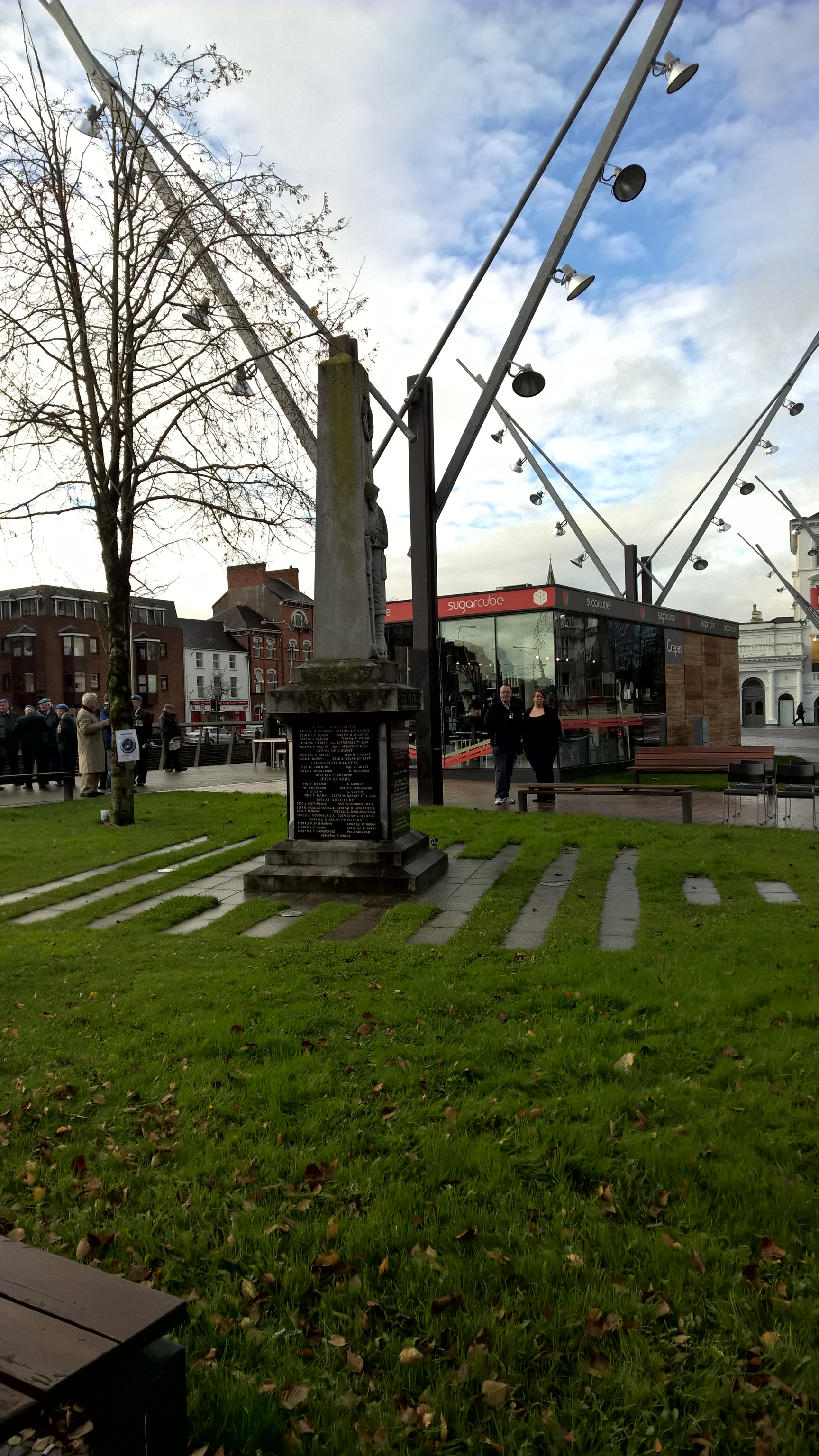
Great War Memorial on South Mall, Cork

Great War Memorial  South Mall, Cork

On the 11th hour of the 11th day of the 11th month in 1918, the guns of the Western Front fell silent after more than four years of continuous conflict. What was originally hoped to be a short and limited European war, ‘over by Christmas’, turned into a period of prolonged stalemate which enveloped the world. As part of the British Empire at the time, Ireland became embroiled in the conflict. The current estimate is that 200,000 Irishmen served in the conflict, although this is a difficult number to be sure of. With many Irish living abroad and enlisting in regiments in their new homes, it can be hard to know for certain how many were involved. It is estimated that between 30,000 to 50,000 lost their lives (depending on whether you count just those serving with Irish regiments or Irish enlisting in other armies).

Until recent years it would seem that the role of the rish in WW1 was ignored and overlooked due to the focus on the events of Easter 1916 and the subsequent War of Independence in Ireland. Fortunately perceptions of the conflict have changed, although it still remains a controversial subject for some, especially the practice of wearing a poppy. Our Taoiseach has today laid a wreath in Enniskillen as part of their Remembrance Sunday events and our Minister for Foreign Affairs was a participant in Belfast events. Our President has attended the Remembrance service in St Patrick’s Cathedral, Dublin.

Members of the Cork branch, Western Front Association

Members of the Cork branch, Western Front Association

Here in Cork we are fortunate to have a number of groups and individuals who are very dedicated to commemorating those who served in the Great War. Over the last few years the members of the Cork branch, Western Front Association have organised a number of events over the weekend closest to November 11th. On the Friday they hold an Evening of Remembrance in St Fin Barre’s Cathedral. This is always a truly moving event combining songs, music, stories and poetry. On the Saturday they organise is a gathering at the WW1 memorial on the South Mall in Cork for a wreath laying ceremony. Both the Lord Mayor of Cork and the Mayor of Cork County delivered speeches. On the Sunday a seperate ceremony is held by members of the Royal British Legion, along with a number of special masses.

Lord Mayor of Cork, Cllr Chris O'Leary

Lord Mayor of Cork, Cllr Chris O’Leary
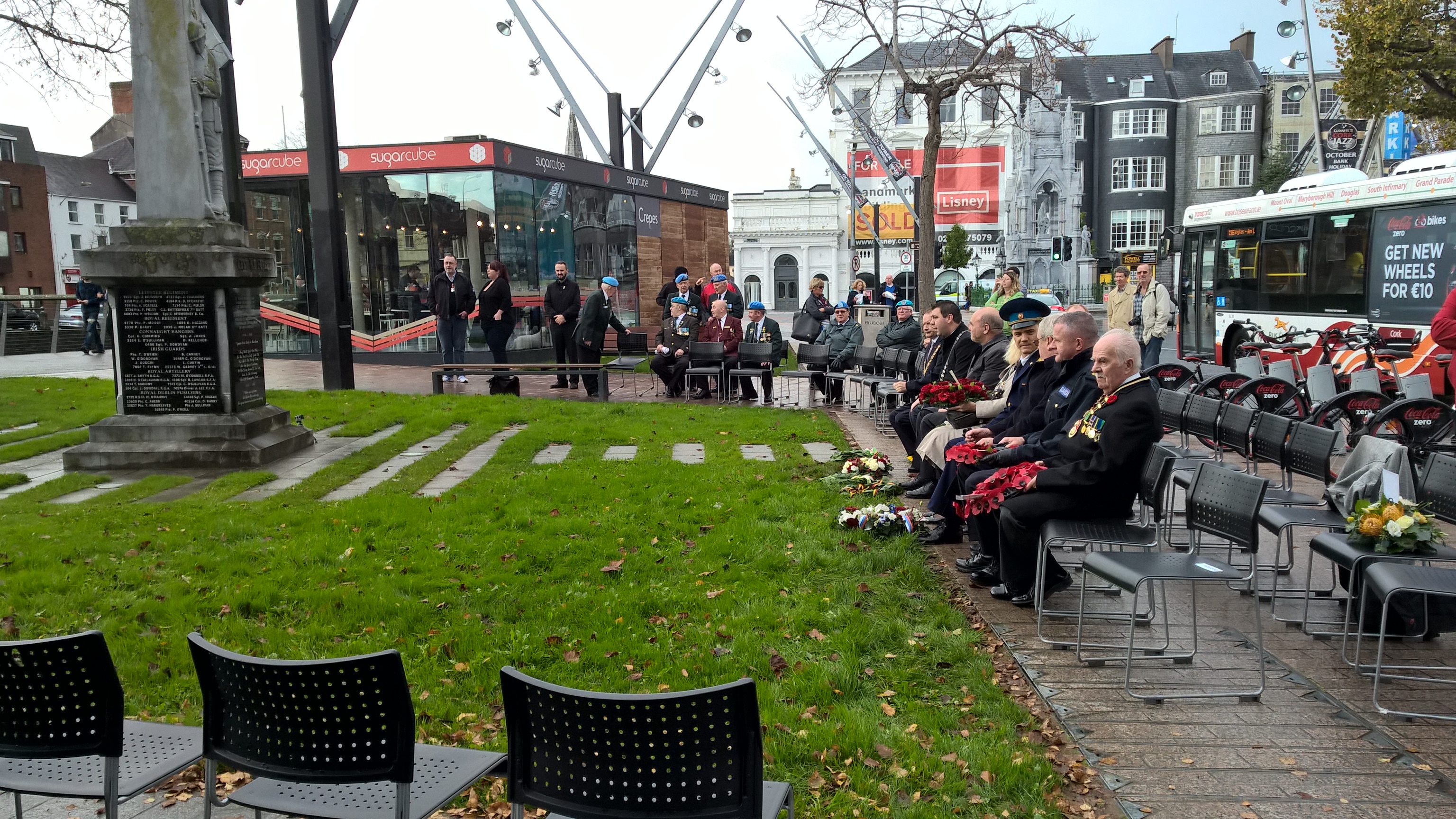
Crowd gathered at the WW1 memorial for the wreath laying

Crowd gathered at the WW1 memorial for the wreath laying

From a genealogical point of view these commemoration events can be very important. We don’t have to approve of the War or why and how it was fought. But it is important to remember those who lost their lives in the conflict. Every family in Ireland would have known someone who enlisted to fight in the War and each had their own reasons for doing so. These commemoration events help us to learn more about the lives our ancestors lived and to appreciate who they were. Too often when we read about these conflicts it can seem like an endless stream of numbers and big battles. But by commemorating them, we realise that each of these numbers was a living breathing individual at one point with a story to tell.

As part of the Rembrance weekend, Ancestry have opened up their WW1 records to explore for free. Usually I’m not one to plug the subscription websites, simply because they are so well known. However on this occasion it’s a great opportunity to search for your WW1 ancestors and see what sort of information might be out there.

WW1 Medal Roll

WW1 Medal Roll

A Genealogical Embarassment Of Riches – Part 2

There was some very good news for Irish genealogy recently with the release of the Catholic Parish Registers from the National Library of Ireland on July 8th

                                          National Library Of Ireland

Previously these records had only been available to consult in the Catholic churches directly or on microfiche in the National Library of Ireland. They were also available on the paid site Roots Ireland.

But why are these records so important for researching in Ireland?

Ballyporeen Parish Record

Ballyporeen/Templetenny Parish Record Excerpt

As I have mentioned in previous blog posts no census records survive prior to 1901, with the exception of some fragments from various 19th century census. Civil Registration for Catholics was only introduced in 1864 and the Public Records Office fire of 1922 has meant that many other records have been lost to us forever. Surviving records such as Griffiths Valuation and the Tithe Applotment books were never meant as census records and typically only list the head of household.

The Parish Registers on the other hand in some cases go back as far as the 18th century, which is much further than most have been able to dream of tracing our family history so far. There are a number of caveats which need to be kept in mind when using these records though.

  • Only baptisms and marriages are covered. Records of Catholic burials weren’t kept up until the early 20th century.
  • The registers kept by the National Library in most cases only extend as far as the 1880s. For anything later than that researchers will have to consult with the individual parishes.
  • The registers are not indexed or searchable. While it’s only a matter of time before one of the big genealogy companies, such as Ancestry or Findmypast gets around to doing this, in the meantime consulting the registers means scrolling through each set of records to find what you are looking for.
  • The handwriting can also prove to be an initial stumbling block. Some people have described it as spidery. Compared to modern handwriting it takes a lot of getting used to.
  • The use of Latin names can also lead to some confusion. Remember this was at a time long before Vatican II, when Latin was still used for nearly everything in the Catholic Church. It’s worth searching online for a good list of Latin names and their English equivalents when examining the registers.
  • Some parishes are missing. When the registers were initially being photographed back in the 1950s some were missed due to human error. This will happen with any transcription of records to another medium. There were also parishes that simply did not exist at this time and only became seperate entities later on.

That being said these records are still an amazing rescource. It’s obvious that a lot of thought went into the website design to make it user friendly. You can type the parish name into the search box or zoom in on the map to locate it. The records themselves are clear and legible. You can zoom right in and adjust the contrast settings if a particular page is difficult to view. When you open a record you can also go straight to a particular year, which is a huge bonus given how many baptisms and marriages took place in a typical year. Once you locate your ancestors in the register you can download a copy of that specific page.

There are also some ways to make searching easier. It might sound counter intuitive but when you first start, look for a date you already know about. If you have a specific date for an ancestors marriage or baptism then try to find that first. It will give you an opportunity to understand the layout of the registers and to get used to the handwriting.

There were some concerns from some of the Local History Centres, who run the Roots Ireland website, throughout Ireland that making these records freely available would inevitably mean the end of their business. Up until now they had been the main repository for transcripts of the registers. However it is my belief that the opposite will happen. For a lot of visitors to Ireland looking to trace their ancestors, these centres will still be one of their first stops because they hold transcripts of the records and because of their local knowledge. A subscription to Roots Ireland can also be helpful for using their transcripts in parallel with the registers.

The online registers might not be perfect but they are an amazing resource and hats off to the National Library for all their hard work and dedication in getting them online. The future of Irish genealogy is looking very bright and I wonder what other previously inaccessible records we can look forward to.

You can find the registers online at http://registers.nli.ie/

Ancestral Connections

Tomorrow sees the start of the ACE Genealogy Summer School: Ancestral Connections: Names, Places & Spaces in University College Cork. This is an annual summer school organised by genealogy Lorna Moloney and has been running since 2013

Ancestral Connections Poster

I have been acting as a volunteer since the summer school began and it’s gratifying to see it grow each year. Last year there were roughly 50 delegates in attendance for the entire week, with others attending for one or two days. The delegates come from all over the world and is a testament to the spread of the Irish diaspora.

The range of speakers covers a huge variety of topics concerning Irish genealogy, from land records, workhouses, adoptions, military and graveyards to list only a few. There are also a number of field trips to allow the delegates a chance for some fresh air and to explore the Irish scenery.

This will also be my first time speaking at the summer school. I have been selected to deliver the final presentation of the week ‘Using genealogy to interpret memorials & monuments’. It’s a great honour to have such an opportunity.

Although the lectures come to an end on Friday July 3rd, for those who decide to stay around for the Saturday there is an opportunity for a field trip to West Waterford.

More information on Ancestral Connections is available here http://www.ucc.ie/en/ace-genealogy/