Getting Started

With St Patrick’s Day just gone it seems like an appropriate time to talk about Irish ancestors. They say everyone is a bit Irish on St Patrick’s Day but how do you find out? The goal of this entry is to provide some basic tips on some of the initial steps you can take to get you started and perhaps even make it easier if you intend to hire a professional genealogist to undertake research for you later on.

The first step is to try and identify where in your family the Irish connection is. Even if you have a typically Irish name such as O’Connell and O’Neill, you may be surprised to discover your Irish connection isn’t as obvious as you would think. While the largest bulk of Irish immigration took place in the aftermath of the Famine, there have always been Irish people making their way out into the wider world. Just recently I came across an interesting article about how George Washington allowed his troops to celebrate St Patrick’s Day during the Revolutionary War in 1780. Irish people have been settling in the UK and Continental Europe for even longer.

Once you have identified the Irish connection, then the next step is to try and narrow down a county of origin. This isn’t always as easy as it might seem. Too often we have to sort through conflicting information. You might have folklore that has been passed down through the generations suggesting your ancestor came from a certain part of the country but documentation may suggest otherwise. The best way to be certain is to gather as much information as you can, marriage and death certs, census records and if possible, church records. It’s always possible a baptismal record may contain more detail than a standard birth cert. While people had little hesitation in fudging details when it came to government records, they would always be cautious about lying to their priest.

When you are ready to begin your search in Ireland, take a bit of time to become familiar with Irish geography. Remember that the 32 counties of Ireland break down into countless subdivisions of baronies, parishes, townlands, poor law unions, electoral districts etc. Depending on the time period you are examining, having some knowledge of these divisions can make your search much easier.

Irish Poor Law Union Map (Courtesy http://www.workhouses.org.uk)

Surnames can also be a valuable way to find an ancestor. Even common surnames tend to be typically found in certain counties. For example Ryan is most often found in Tipperary and neighbouring counties, Sullivan in West Cork and Kerry and so on. A very useful guide for the distribution of Irish surnames and their variants can be found courtesy of John Grenham on his website.

Irish records have a reputation for being difficult, partially due to the large gaps left by the Public Records Office fire of 1922. But the truth is that there is a lot of information available, starting with the 1901 and 1911 census. Parish records, land valuations, birth, marriage and death records and even historic newspapers can all be extremely valuable in your search.

Once you locate the county of origins for your ancestors it is also worth checking out the websites of local libraries and archives. They may have information and even transcripts of other records unique to that county or city. This may include specific estate records, commercial directories etc. More and more records are being made available so never assume nothing exists.

DNA can also be useful. Ireland may be a bit behind other countries in terms of how many people have taken commercial DNA tests but it is growing in popularity. Only recently, one of our most popular Irish talk shows The Late Late Show was devoted a segment to discussing DNA in genealogy. You can see an excerpt below and watch the full programme here:

Of course DNA testing isn’t a magic bullet. Sometimes it can cause more confusion but if you feel you’ve exhausted every other option then it is worth doing, especially as the costs for the various tests gradually become more affordable. The Internation Society of Genetic Genealogy has a very helpful introduction to the basics of DNA for tracing ancestry.

If you are seriously stuck and at your wits end, then feel free to consult a professional. We don’t bite and are always willing to offer some advice to get you started. You can find contact details for professionals in Ireland here and here. Local archives and libraries might also be able to put you in touch with an expert in the area you are searching.

The final piece of advice is to never lose hope. It can be tough going and there will undoubtedly be many false trails but in the end hopefully it will be worth it.

Genealogical Appreciation

wp_20151031_14_25_19_pro

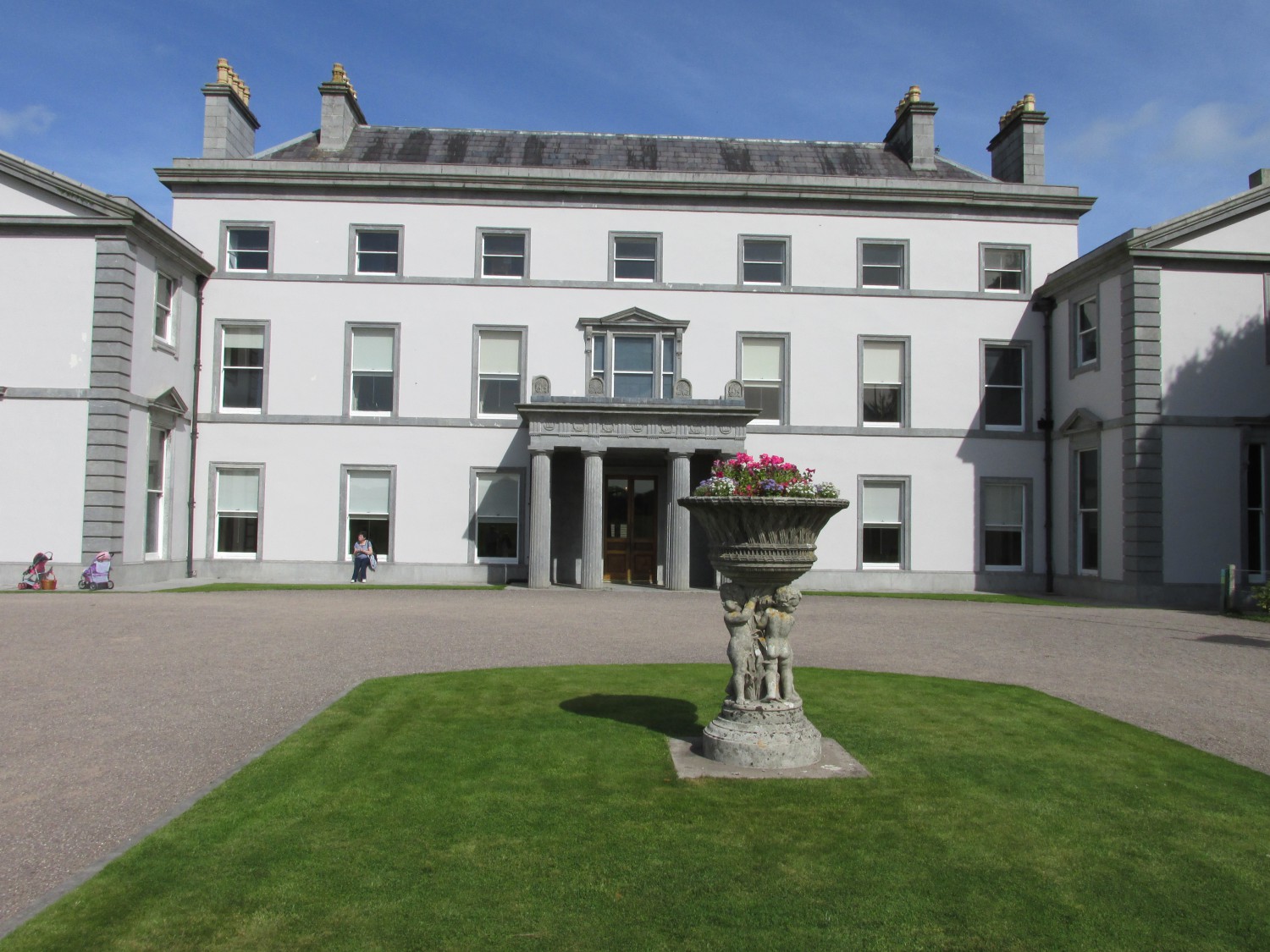
Traveller Caravan in Cork Public Museum

Last Friday afternoon I attended a fantastic lecture on Irish Traveller genealogy and culture at the Royal Irish Academy on Dawson Street in Dublin. This was the first of the 2017 expert workshops organised by the Irish Family History Centre.

The lecture was prompted by recent DNA findings from a new study carried out by scientists in the Royal College of Surgeons Ireland and the University of Edinburgh. You can read a bit more about that here. However, instead of simply concentrating on the genetic side of things, the lecture allowed for a member of the Traveller community, Michael McDonagh, to talk about Traveller identity.

Those outside of Ireland might have only the vaguest sense of who Irish Travellers are. Coming up with a definition that doesn’t sound condescending or discrimination can be difficult. Sometimes they are referred to as Gypsies or Tinkers, along with many other derogatory terms. Perhaps the simplest definition is to say that Travellers are a minority group within Irish society  who maintain their own separate identity. There have been many rumours and misconceptions as to where they originated from. Some believed they were an entirely separate race from the Irish, more closely related to Roma Gypsies. Another widely held theory was that they were the descendants of those forced off their land during the Great Famine. This last belief was to be responsible for much of the prejudice faced by Travellers and a lot of the harm done to their culture through a misguided belief that they should be reintegrated into mainstream Irish society. While the motives for this may have been benign, the lack of proper understanding of their culture caused a lot of long term damage. The talk from Michael was a fascinating insight into this culture. I would have loved to stay on afterwords to talk with him and ask some questions but unfortunately I had to rush for a train back to Cork.

What the DNA evidence has shown is that Travellers are not related to the Roma and are indeed Irish. What it also suggests is that they split from mainstream Irish society roughly around the mid 1600s. The authors of the study are cautious in trying to identify any specific historical event which might have led to the split, which seems sensible. Further testing might alter those conclusions and push the split even further back. The full paper of the study is available to read for free here. Hopefully this will lead to a better appreciation of Irish Travellers and their place within Irish society as a distinct group.

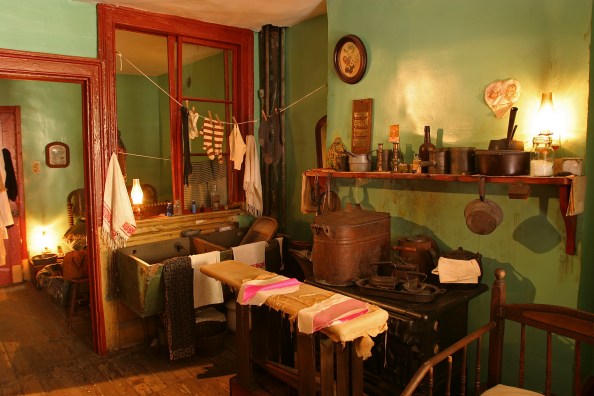
The lecture and the study also got me thinking of two articles I had read in recent months concerning the Tenement Museum in New York. The first article reported on a rise of anti-immigrant comments from visitors to the museum and how staff were attempting to deal with this. Then a few weeks ago, Annie Pollard, their Senior Vice President for Progams and Education, wrote this article on the immigrant experience in the past compared to the present immigrant experience.

hi_res_battman_studios_1

One of the restored apartments inside the NY Tenement Museum (Image courtesy http://tenement.org/)

What all of this got me thinking about was the role that genealogy can play in conversations relating to discrimination and prejudice. It’s worth remembering that the waves of Irish and other immigrant groups arriving in the US in the 19th century weren’t always met with open arms. Some of the rhetoric directed against them is reminiscent of what has been heard in more recent times. Can genealogy help lessen some of this hostility?

Perhaps it is human nature that we will always be suspicious of those who speak a different language, have different cultural traditions or simply don’t look like us. Genealogy certainly isn’t a magic bullet for defeating prejudice but at the very least maybe it can help us appreciate some of the commonalities we share with other groups.

Secret Family Histories

What’s your family secret? We all have one. That skeleton in the closet that we can’t help but be fascinated by, despite the refusal of other family members to acknowledge their existence. Sometimes it can be something personal, an addiction or an illness that was always referred to euphemistically. Perhaps it could be the lack of a marriage certificate, or the date of the wedding coming a bit too close to when the first child was born. Then there are the other types of omissions, the ones that might have resulted from an ancestor being caught on the wrong side of history. Every country has this because it is human nature to try and simplify our historical narrative. This side was ‘good’ and the other side was ‘bad’.

With the Decade of Centenaries in Ireland and all the various discussions taking place, it is easy to assume that Ireland has put all our historical hangups behind us. That we have learned to accept our past and any of the uncomfortable truths hidden there. To some extent this is true. Irish soldiers who fought in WWI now get the recognition they deserve for their bravery and sacrifice. While those who served as members of the pre-independence police forces haven’t been rehabilitated to the same extent, their role in Irish life during the period is better understood.

26931112476_c167afe576_h

Group of Royal Irish Constabulary officers and men (Image courtesy of National Library of Ireland)

I have come across some of this myself when looking into my own family history. Most of my maternal side of the family would have considered themselves to be of Irish Republican lineage. However, that wasn’t the case for everyone in the family. I had one great uncle from Co. Waterford who had served in WWI and was also a constable in the Royal Irish Constabulary. He was stationed in Co. Wexford where he died in 1921 during the Irish War of Independence. His death wasn’t particularly glorious, being accidentally shot by a fellow constable while on patrol. To me and some of my cousins this proved fascinating, but other members of the family weren’t as interested. Perhaps because his role as a servant of the British administration in Ireland during a contested time doesn’t fit with how the family see themselves. This is not to criticise. It is simply who they are. All of us have our inbuilt biases.

zzzgermanwwiisoldiersinireland1_large

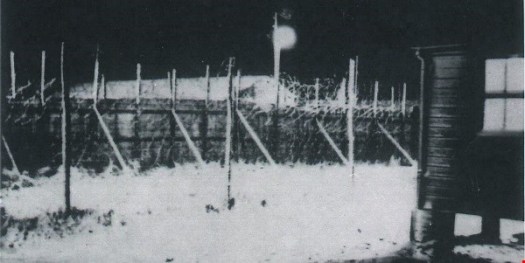
Exterior of the Curragh Internment Camp in the 1940s (Image courtesy of Irish Examiner)

A recent visit to the National Archives of Ireland also put me in mind of another aspect of Irish history that is often overlooked and it’s connection to my own family. Ireland maintained an official policy of neutrality during WWII, although a number of Irish did enlist with the British army and the armed forces of other Allied forces. On the home front there were those who believed in the old maxim that Britain’s difficulty was Ireland’s opportunity. The IRA launched a bombing campaign in Britain. In order to maintain their position of neutrality, and avoid a potential invasion by Britain, the Irish government felt the safest course of action was to intern all those suspected of IRA membership. This was certainly not the first or last time such a policy was carried out on this island. The internees were placed in a camp in the Curragh, nicknamed ‘Tintown’. Among those internees, was my grandfather, his brothers and some of their friends. My grandfather never liked to speak of his time in the Curragh and it is a period rarely discussed in Irish history. I suspect there is a certain shame when it comes to the history of internment without trial.

This being my first research visit to the National Archives, I wasn’t entirely sure of how I would find the appropriate records. Were they considered criminal records? Or were they military? Or perhaps they fell under another category entirely? I guess I’ve been spoilt by the easy access to online catalogues. I approached the archivist on duty and sought her help. I think it shows how rarely these records are consulted that it took her some time to figure out what they were held under. We eventually located some of the records related to the Curragh under the Department of the Taoiseach. Although I didn’t locate anything specifically connected to my grandfather on this visit, I did come across one illuminating account of how order was maintained in the camp. Some of the guards carried guns and during one particular disturbance, they opened fire on the internees. A number were injured and one died of his wounds not long afterwards. I don’t know if my grandfather was present for this disturbance or if he had any involvement in it. I can tell I have more research to do and I have become curious about delving into this period. If anyone reading this does have more information or photos of internees from the period, please send me a message.

All of this has made me realise that genealogy doesn’t stop within recent memory. Just because we knew a previous generation, doesn’t mean that there is nothing more to uncover. Sometimes these secrets may be uncomfortable but that is the inherent risk with delving into our family history.