Why Genealogy?

This post was prompted by a very thought provoking blog from John Grenham last week titled ‘Why Do You Love Genealogy’? It’s something anyone considering a career in genealogy or even approaching it as a hobbyist should read and ponder on. It’s certainly something everyone will have their own perspective on. I felt that it might be useful to write up my own thoughts on this question and a good way to get back into regular blogging.

wp_20160518_15_12_44_pro

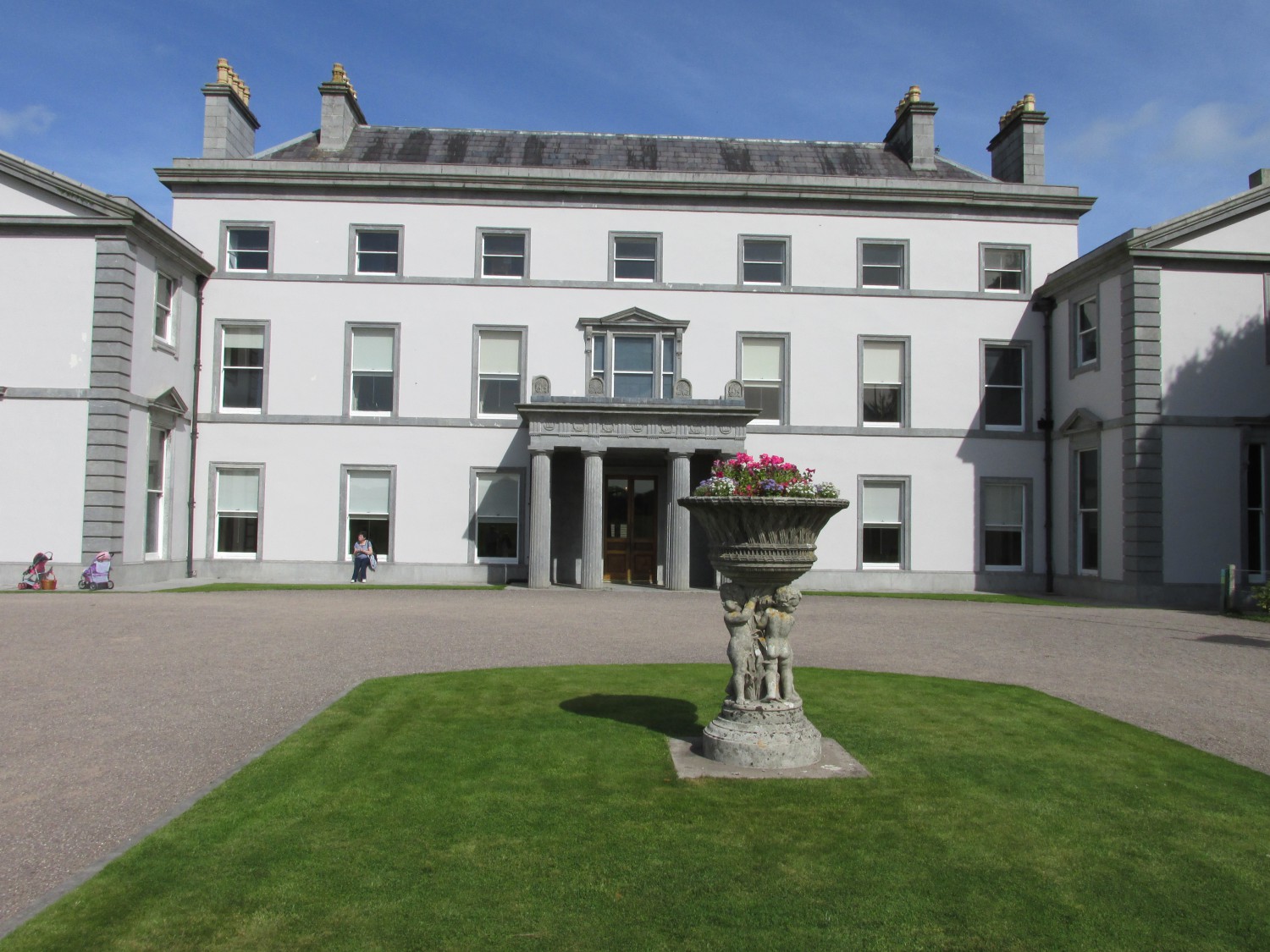
Reading Room in National Archives of Ireland

So why did I decide to become a professional genealogist? At first glance it might not seem like a smart career move. Unless you work for a company in an office somewhere (such as Ancestry or Findmypast) then chances are you will be going solo. There are no set hours. Genealogists by their nature tend to be slightly obsessive and tenacious. We will sometimes work long into the night exploring the latest record sets or just trying to track down that elusive ancestor.

But that is a big part of what I enjoy about being a genealogist. There is the thrill of discovery. It’s hard to describe that feeling of achievement when you finally decode the information on a marriage certificate or that census form. Each clue can lead you in unexpected directions. There is always something new to learn. No enquiry is ever exactly the same. A seemingly routine search could start in a neighbouring parish and take you halfway around the world before ending back where you started. But on that journey you uncover so many amazing stories.

As someone who is obsessed with history, genealogy is also an eye opener. Too often we only learn history through the big events. The rise and fall of empires, the wars and famines, the ascension of kings to thrones. But genealogy gives you a different perspective. Instead of the broad sweeps you discover the smaller, more intimate stories. Sometimes these will even contradict the established narrative surrounding past events.

But perhaps what I enjoy most about genealogy is that it matters. We can watch the various celebrity genealogy shows and roll our eyes a bit (“Well of course they are going to be related to royalty aren’t they?”). But even with all the editing and multiple shots required for an episode of a tv series, we shouldn’t underestimate just how strongly we feel about our ancestors. Often when we research them, the stories we uncover will tell us something about ourselves. Whether we like it or not, our ancestors form part of our sense of identity.

I’m sure I could write a lot more and maybe someday this will form the basis of an article or a talk. But for now I think what I’ve written above will suffice. Hopefully I’ll have more thoughts soon.

GENEALOGY OF THE RISING

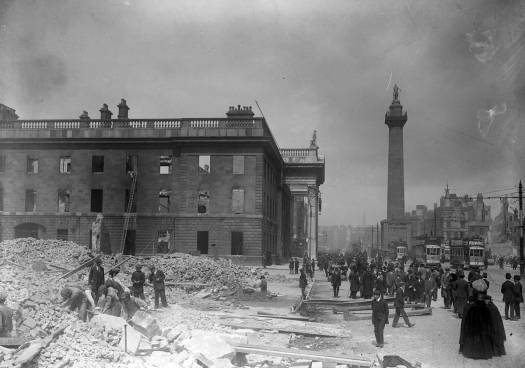
100 years today on the morning of what was then Easter Monday 1916, a group of armed insurrectionists seized a number of buildings around Dublin. These insurrectionists were members of the Irish Volunteers, the Irish Citizens Army and Cumann na mBan. This included the General Post Office on Sackville Street (now O’Connell Street). Soon after two unfamiliar flags were raised above the GPO and a proclamation read out which declared that Ireland was now a Republic. For most of the following week Dublin would be engulfed by the Rising.

general_post_office_dublin_20060803

GPO Dublin

people-and-places-sites-of-1916-gpo

GPO 1916 (Photo: National Library of Ireland)


blog-web-archiving-2

Original Copy of the 1916 Proclamation (Picture: National Library of Ireland)

This insurrection was the 1916 Rising and it would become the defining moment in the struggle for Irish Independence. By the time the Rising came to an end, 485 people had lost their lives. The majority of these were civilians who had been caught up in the crossfire, including 28 children. 107 Crown forces were killed, including Irish soldiers serving in the British army. 17 policemen lost their lives during Easter Week, only four of them in Dublin.  Of the Rebels, 58 were killed. 16 men were executed for their role in the Rising, including Thomas Kent in Cork and Sir Roger Casement in London.

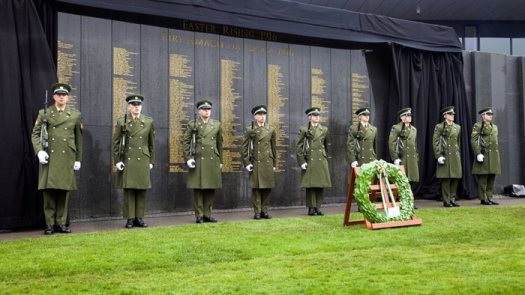
Much has been written about the events of that week and even a century on there is still plenty of debate about whether the Rebels were justified in their actions and how they should be remembered. A recent Remembrance Wall unveiled in Glasnevin Cemetery on April 3rd caused plenty of controversy because it listed the names of all those who died, including Rebels, Civilians and Crown forces. The names are displayed chronologically.

700

Glasnevin Necrology Wall (Picture: UTV.ie)

In some respects we are also still attempting to untangle myth from fact when it comes down to who was involved and what actions they took. Fortunately much work has been done in the last few years, particularly by genealogists. Multiple new record sources have been made freely available online.

One of the best sources to consult is the Bureau of Military History. They have uploaded copies of witness statements taken from those involved in 1916. They also have press cuttings from the period. If you are looking to confirm whether a particular family member was involved in the events of 1916 then it is worth consulting the pensions collection in the Irish Military Archives. The information contained on both these websites can be extremely helpful in determining whether a family member did indeed see action during the period and where they were involved.

00085f57-942

Extract from sworn statement made by Oscar Traynor TD, former Officer Commanding Dublin Brigade IRA, before the Advisory Committee, Military Service Pensions Act, in support of Mathew Stafford’s application for a military service pension under 1934 act

00085f56-942

Undated letter from Eugene Gilbride verifying Linda Kearns MacWhinney’s position as an officer with Sligo Brigade IRA at the time of her arrest on 20 November 1920

The National Library of Ireland and the National Archives have also uploaded much of their collections connected to 1916. Of particular note are the Property Losses (Ireland) Committee 1916 compensation files in the National Archives. These files contain compensation claims from those whose homes or businesses were destroyed during the Rising. They can be extremely valuable if you had family living in Dublin at the time who weren’t directly involved in the fighting but still suffered as a result.

One of the best websites that has come online in recent years is the Letters of 1916 project. This is the first public humanities project in Ireland. It’s goal is to create a crowd-sourced digital collection of letters written around the time of the Easter Rising (1 November 1915 – 31 October 1916). This isn’t limited to Dublin or the Rising, but includes letters from all around the country and on a number of topics. Members of the public are invited to contribute through uploading their own letters from the period and also to assist with transcribing the letters.

Not to be outdone, Ancestry.co.uk and Findmypast.ie have both made their own contributions.

Ancestry have released Courts Martial Files and Intelligence Profiles connected to the period. They also have access to the Military Service Pension Index and the National Army Census of 1922.

Findmypast.ie have made available their Easter Rising & Ireland under Martial Law, 1916-1921 collection. The 75,000 records include reports and military intelligence detailing the events of Easter week 1916. These records are free to search until April 27th.

This is only a brief listing and there are many other great resources out there. The National Library is currently involved in compiling an archive of many of the websites which were set up to honour 1916.

Regardless of how we view the Rising and those who participated, we can at the very least find out a lot more information on what was actually happening during the period.

Update: I just realised that I neglected to include this fantastic podcast by my friend Lorna Moloney for the Genealogy Radio Show on Radió Corca Baiscinn. It offers a genealogical introduction into the lives of the signatories of the 1916 Proclamation.